

Rakiura Track Guide: 3 Days Camping on Stewart Island Solo


I used to tell myself I’d never go backpacking.
As much as I loved hiking, I hated camping. Plus the idea of carrying everything on my back sounded miserable.
For years I was convinced backpacking wasn’t for me.
Yet somehow, I found myself spending a year in New Zealand and signing up to walk the Rakiura Track as my first ever backpacking trip.
Not only did I finish it, I loved it. I've since hiked more of New Zealand's Great Walks and am planning to do all 11 of them during my time in Aotearoa.
In this guide, I’ll share what it’s really like hiking the Rakiura Track (including how muddy it gets!), why I’m glad I chose to camp instead of staying in the huts, and practical tips to help you feel confident and prepared for your trip. You’ll be ready to plan your Stewart Island adventure without the stress.
Track Overview
Here's a quick overview of the Rakiura Track:
- Total distance: 19.9 miles (32.1 km) officially, 24.3 miles (39.1 km) from Oban
- Average days to complete: 3 days
- Total elevation gain: 4,235 ft (1,291 m)
- Campsites and huts available: Maori Beach Campsite (16 campers), Port William Hut and Campsite (16 campers, 24 hut spots), North Arm Hut and Campsite (16 campers, 24 hut spots)
- AllTrails map and track guide
- Department of Conservation track info
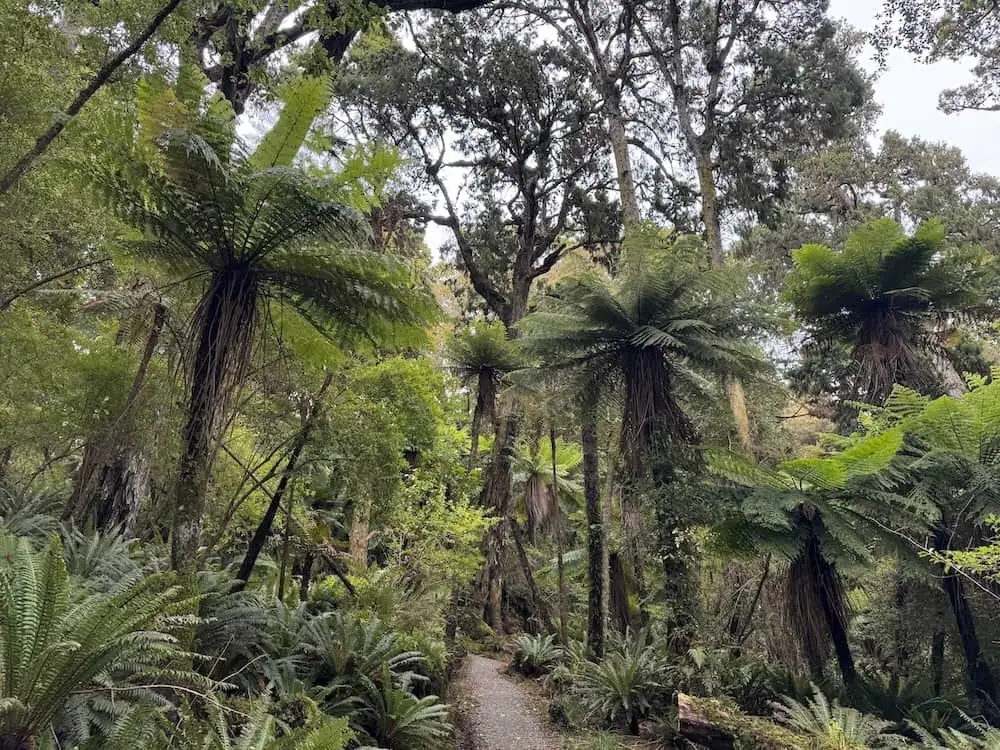
The Rakiura Track forms a circuit on Stewart Island, also known as “Rakiura,” it's Māori name meaning “glowing skies.” As its name implies, hikers can expect to find amazing stargazing opportunities along the track if skies are clear.
But the Rakiura Track has even more to offer than just its amazing skies. This quieter (and somewhat easier) Great Walk takes hikers along stunning coastlines and through regenerative forests that have been untouched by timber milling for close to 100 years.
And while the track doesn't have the stunning alpine scenery that makes many other Great Walks special, it has something else to set it apart: the wildlife. Stewart Island is one of the best places to see see notable New Zealand wildlife like kiwi birds, fur seals, sea lions, penguins, and more.
I had been longing to visit the island for over a year now after hearing about its amazing wildlife. That's a huge reason why I chose the Rakiura Track as my first ever Great Walk.

Is it Safe to Walk the Rakiura Track Alone?
Yes, it is generally safe to walk the Rakiura Track alone, even if you're a woman.
I walked the track alone and never felt unsafe, even with it being my first backpacking trip.
The only times I ever felt uneasy on the track were when I heard strange noises in the forest. But then I just had to remind myself that nothing here can kill me!
They have no bears or other dangerous wild animals. Just birds, rodents, and deer.
Even though the Rakiura Track is a somewhat quieter Great Walk, you can expect other people to be around, especially during the high season in summer. You'll find that many other people hike the Great Walks alone. It's easy to meet other hikers and make friends along the way.
I left the Rakiura Track having made a handful of lovely friends who I still chat with from time to time.
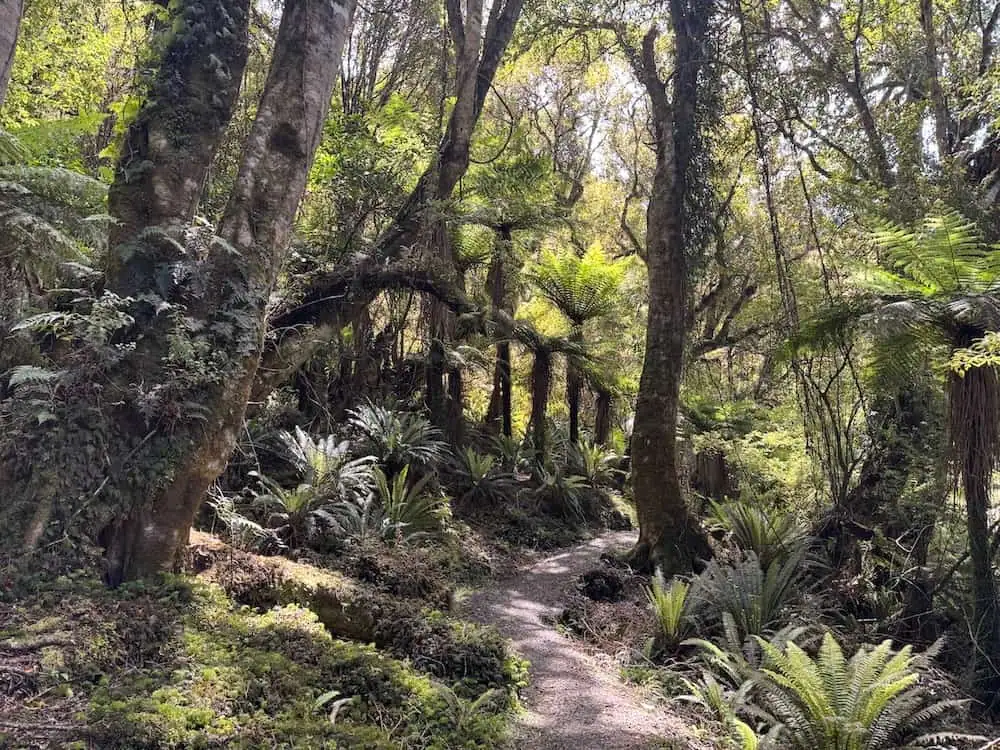
In addition, the Rakiura Track doesn't have any particularly challenging terrain or dangerous areas. Paths are well marked and easy to follow. You can even get cell service along some (but not all) portions of the track.
It helps too that New Zealand is considered one of the safest countries in the world, usually in the top 5.
However, as with any solo travel and hiking out in the wilderness, you have to make sure to take extra precautions to mitigate risk and ensure your safety. Here are some safety tips for walking the Rakiura Track alone:
- Always tell someone your plans. Let them know when you're leaving and when you should finish.
- Make sure you have everything you need. This includes a water filter, enough food for your walk (plus some extra!), a first aid kit, and essential safety items.
- Consider carrying a satellite communication device or personal locator beacon (PLB). Personally I use the Garmin inReach Mini 2 so I can call for help if needed, check the weather, and message loved ones at home. If you don't have a device like this already, you can rent a PLB from the Department of Conservation visitor center in Oban on Stewart Island.
- Be prepared to encounter all kinds of weather. They say you can experience all four seasons in a day in New Zealand, and the weather can be hard to predict for Stewart Island. Make sure you have the clothing you need for the heat, cold, and rain.

Planning Your Walk
As you plan your walk on the Rakiura Track, here are some tips and information to help.
Which is Better: Camping or Staying in the Huts?
The answer to this question really depends on what you're looking for. Here are some pros for each:
Camping
Camping on the Rakiura Track gives you a better chance of hearing wildlife around you (especially kiwis!) at night. While I didn't personally see any kiwis when I did this walk, I was very happy to hear their calls throughout the night.
I imagine camping makes it so much easier to hear potential kiwi bird calls, which is why I'm SO happy I camped!
I also appreciate the additional privacy that camping provides, and I found it easier to make a nice group of friends since everyone spent much of each afternoon and evening enjoying time together in the shelter.
And if you're on a budget, camping is much cheaper than staying in the huts, so that's something to consider too.
Huts
Huts tend to provide a bit more comfort given you have more of a normal mattress instead of just a sleeping pad. You get more protection from the elements, which can be nice with New Zealand's erratic weather. Plus, you can carry a bit less.
Note that while some huts on other Great Walks have gas cooktops and flush toilets, the huts on the Rakiura Track do not.
I did not use the long drop toilets in any of the huts, but I found them to be quite nice at the two main campsites I stayed in. They were very clean and had loads of toilet paper.

How Hard is it to Get a Booking?
The Rakiura Track seems to be one of the easiest Great Walks to book.
Personally, I walked during one of New Zealand's busiest holiday periods–around the New Year–and booked a little less than two months before. When I booked, one of the huts was open for my dates, but the other wasn't, so I decided to camp.
The huts can definitely fill up, but if you look a month or two beforehand, you might be able to get a spot. Camping spots, however, seem much more available. As I write this, camping spots are available almost every day, even starting tomorrow!
In my experience, it can sometimes be harder to find accommodation in Oban than to book this Great Walk! Oban is very small, and it's the only place to stay on the island outside of the DOC huts and campsites.

When's the Best Time of Year to Walk?
Unlike many of the other Great Walks, you can walk the Rakiura Track year round.
That said, I found summer a nice time to walk as you have warmer temperatures and long daylight hours.
How Much Does Walking the Rakiura Track Cost?
You can expect to spend around $358-$472 NZD to walk the Rakiura Track. This includes:
- Round-trip ferry or plane to the island (almost the same cost): $274 NZD
- 3 nights in campsites on the track (international adult, high season): $84 NZD
- OR 3 nights in huts on the track (international adult, high season): $198 NZD
This does not include other expenses like your backpacking gear, food, parking on the South Island, or hotel stays before or after your walk.

Track Logistics
Compared to many of the Great Walks, the Rakiura Track itself is a bit simpler in terms of logistics since it's almost a full loop. However, since you can't just drive to Stewart Island, there are some logistics you need to think through a bit as you make your plans.
Finding Accommodation on the Island
As I noted above, finding accommodation on the island can sometimes be the most difficult part of planning! Oban is a very small town and only has so many accommodation options.
Because of that, I'd look into accommodations first before you start solidifying your plans so you can make sure you have somewhere to stay.
Note: it is possible to walk the Rakiura Track without staying on the island before and after. However, Stewart Island is a special place with much to offer, and I recommend spending at least one extra day or two there if you can.
I had to stay in three different places during my visit to the island since places had booked up pretty far in advance. To be fair, I was there during a very busy time of year though.
Here are some places I recommend staying in Oban:
📍Budget Option: Stewart Island Backpackers is the main hostel on the island. It has small shared rooms and private rooms as well as spaces to camp in a tent if you want the most budget-friendly option. I stayed there myself and it seemed like almost everyone I met stayed there as well.
📍Mid-Range Option: South Sea Hotel is an ok hotel with arguably the best location in town. I stayed here for a night in a private room with a shared bathroom. I found it a little grimy, but it was a good deal for a private room and nice that it has the only pub in town too.
📍Luxury Option: The Bay Motel is a lovely property in town with nicer rooms and free shuttles for the ferry or plane. I stayed here on my last night and had a massive suite with multiple rooms, my own bathroom, and a deck. If you want to treat yourself, this seems like a good place to do it.

Getting to the Island
You can either take the approximately 20-minute flight from Invercargill or the one-hour ferry from Bluff to get to and from the island. They cost about the same, so it really comes down to your personal preference.
Some locals refer to these experiences as the “20 minutes of terror” for the flight and the “vomit comet” for the ferry… Sounds enticing, huh?
I wanted to experience both for myself, so I took the flight to the island and the ferry back.
Which one is better? (or the lesser of the two evils?)

Personally, I preferred the flight because the views were so cool. You are in a very small plane, which might seem a little freaky, but keep in mind that they do loads of these flights every day.
I was lucky to fly over to the island on a beautiful sunny day. Somehow I even got to sit in the co-pilot seat!! I got incredible views as we approached the island, although I tried to keep my photo taking to a minimum so I didn't distract the pilot.
The one downside to flying is that you have a 15 kg checked luggage maximum included in your ticket. All of my backpacking gear (plus the few extras I brought) barely fit that, so I wasn't able to bring much food with me. That meant I bought most of my food on the island, making it a bit more expensive.
Note that you cannot bring gas canisters on the plane. You can bring them on the ferry, but there is a $6.50 NZD charge per canister.

On my ferry ride on the way back, the waters were a little bumpy but not too bad. Personally, I always take motion sickness medicine before ferry rides like that and it helps a lot. From there, I had to take a shuttle back to my car parked at the Invercargill airport.
Torn between the two options? Why not try both like me!
Take the flight there and the ferry on the way back. Through the ferry, you can also book a transfer so you can get from Bluff back to the Invercargill Airport where you've left your car.

Purchasing Food and Gear for Your Walk
You'll likely need to buy a few things in Stewart Island before your walk. Or at the very least, if you took the plane over, you'll need to buy a fuel canister.
While the town is small, it is fairly well equipped for hikers since it's such a popular tramping destination.
There's a Four Square grocery store in town that has a decent selection of foods. You can typically find dehydrated backpacking meals there and sometimes fuel canisters too.
I personally pre-ordered my dehydrated backpacking meals, fuel canister, and a lighter from Stewart Island Outdoor Adventure & Gift Shop. That way I knew I could count on having what I needed and not have to stress about it.
If you need any backpacking gear, you can purchase or rent a variety of items from the outdoor store as well like backpacks, sleeping bags, gaiters, etc.
Getting to and From the Track
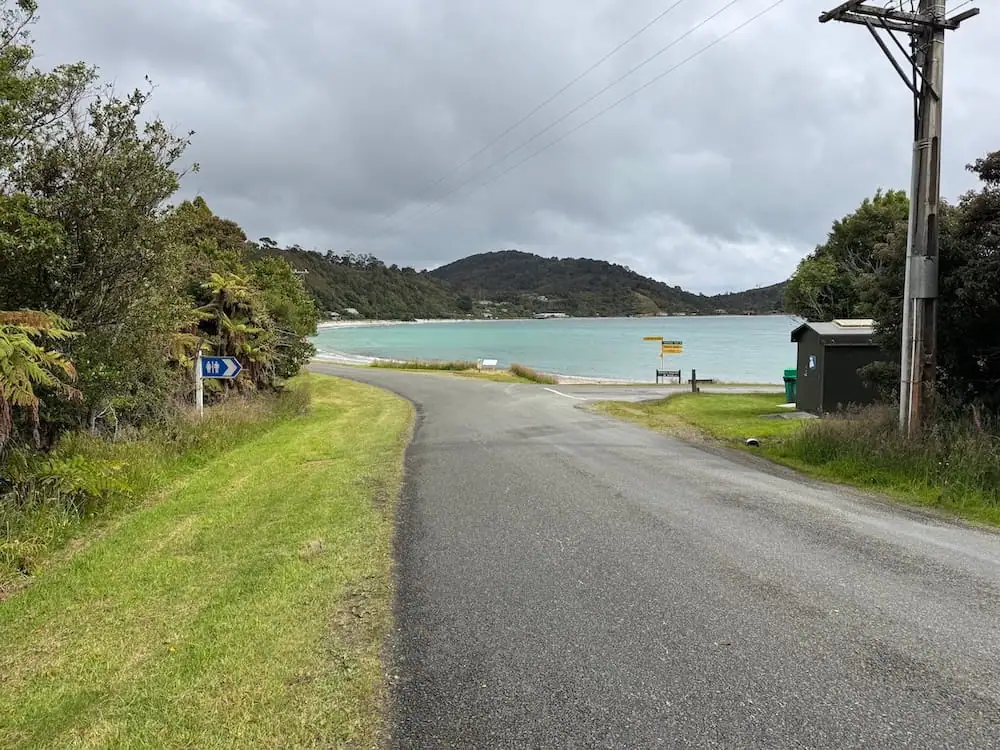
The Rakiura Track technically starts and ends at Lee Bay Road and Fern Gully Road. Many people, myself included, choose to just walk from town as it only adds about one hour to Lee Bay Road and 20 minutes from Fern Gully Road.
If you'd prefer to skip walking in and out of town, you can pre-book a taxi instead. My hostel recommended Aurora Cab Company (phone: 0277 227 935).

Packing for the Rakiura Track
Here's a high-level packing list for the Rakiura Track with links to some of the gear I use myself:
- Sleeping bag or quilt–If you go with a quilt, then I would also bring a sleeping bag liner if you stay in the huts.
- Sleeping pad (if camping)
- Tent (if camping)
- Food for all the days you're walking plus one extra day–Popular dehydrated meal brands in New Zealand are Real Meals, Back Country Cuisine, and Radix.
- Cooking pot, stove, gas canister, and lighter or matches
- First aid kit
- Safety items–make sure you have the 10 essentials
- Headlamp–I've linked the one I use, which is highly rated, but I wish it had a brighter red light for looking for kiwi birds.
- Pillow (optional)
- Set of thermal underwear
- Pair of dry socks for sleeping–Don't underestimate the power of sacred sleep socks!! The last thing you want is to go to bed with wet socks.
- Pair of shorts (optional)–These are for the hut if it's warm inside and/or for keeping your pants from getting too muddy.
- Rain gear
- Warm layers
- Extra pair of shoes for camp/huts
- Gaiters (optional)
- Earplugs and eye mask (optional)
- Power bank and charging cords (optional)
- Toiletries (don't forget sunscreen and bug spray)
Walking the Rakiura Track in 3 Days
Now let's dive into the fun part–the walk itself! Here I'll talk you through my journey on the Rakiura Track over the course of 3 days.
However, know that you don't have to do my exact itinerary. You could even walk just a portion of the track for a day hike if you'd prefer.
This is just intended to be a helpful guide so you know what to expect and can start planning your trip.

Day 1: Oban to Port William Hut and Campsite
Total Distance: 8.03 miles (8.1 km)
Estimated Elevation Gain: 1,732 ft (528 m)
Approximate Walking Time: 4-5.5 hours
I started my trip from Oban, where I first checked in with the Department of Conservation visitor center to get the latest track info.
Getting to the Official Start of the Rakiura Track
As noted before, you have the option to take a taxi to the official start of the track, but many people choose to walk from town instead. That's what I did, and I really enjoyed it!
From town, it takes around 1-1.5 hours of walking along a fairly quiet road to get to the official trailhead. It's a lovely walk, especially once you reach Horseshoe Bay.

The road to the track follows the bay for quite a while. If you need to take a quick break, this is a great place to sit and enjoy the ocean views for a bit.
After walking along most of the bay, you'll take a left turn onto Lee Bay Road. Don't worry about missing the turn–signs mark this turn well.
And then at the end of the road, you'll get to the official start of the Rakiura Track. Here you'll be greeted with ocean views again. For the rest of your walk you'll pop in and out of the forest alongside the coast.

Lunch Break at Maori Beach Campsite
About 1 hour or so later you should reach the Maori Beach Campsite. This is a fairly small campsite where some choose to spend the night, but most walkers just pass through it, stopping only for lunch. You can see some old timber milling relics here.

Maori Beach Campsite has a water tank where you can refill your bottle if needed. I recommend filtering your water, but not everyone does. There's also a long drop (pit) toilet here.

Port William Hut and Campsite
After another 2.5 to 3 hours, you should reach the Port William Hut and Campsite. This campsite is really lovely right on the beach. If it wasn't so windy when I stayed, I'm sure I would have enjoyed relaxing by the water.
I found the campsite to be quite nice with plenty of spaces to set up tents, a really clean long drop toilet (with lots of toilet paper!), and a shelter.

Day 2: Port William Hut and Campsite to North Arm Hut and Campsite
Total Distance: 8.08 miles (13 km)
Estimated Elevation Gain: 2,271 ft (692 m)
Approximate Walking Time: 4.5-6 hours
To start Day 2, you'll return back up the path you walked yesterday. Mentally prepare yourself because it's a bit steep!

Turning Inland
After about 30 minutes to 1 hour, you'll turn right, leaving the coastline and heading into the forest. You'll pass by loads of ferns, tall trees, and even some more timber milling relics from about 100 years ago.
There are lots of steps downhill as well. I imagine walking in the other direction would be quite tough with all of the inclines.
Navigating the Mud
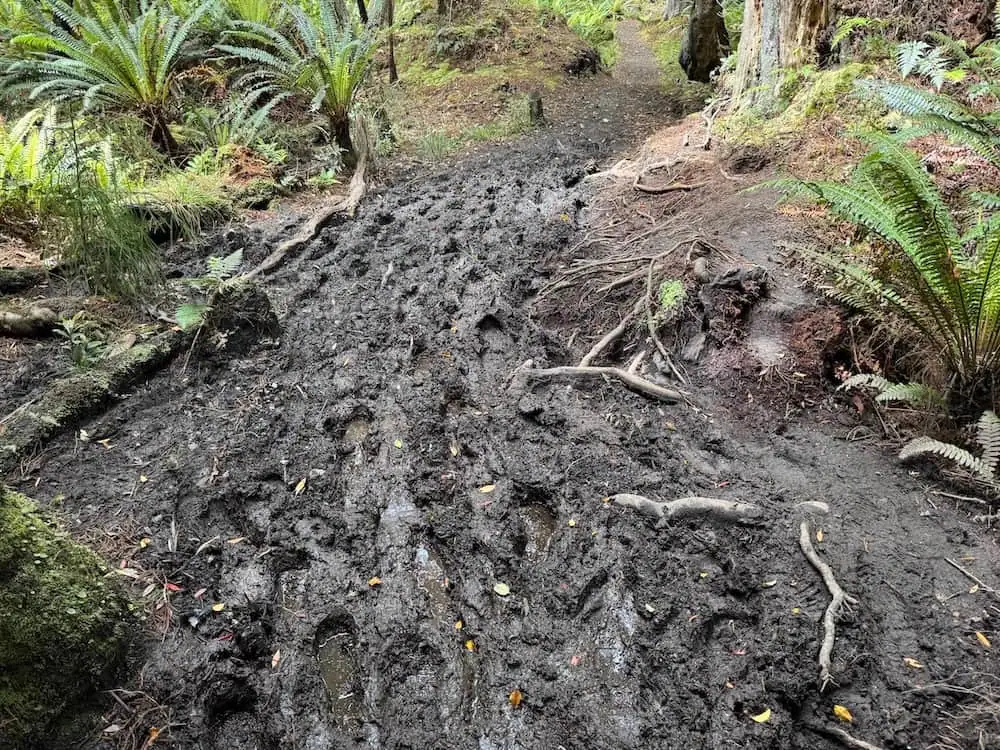
But what makes this day really interesting is the mud… LOTS of it. Some of my fellow walkers seemed to avoid it, but somehow I didn't…
It seemed to me that you just had to embrace the mud and trudge through it.
At one point, I took a step and suddenly started sinking down. The mud went all the way up to about halfway up my shin. It hadn't even rained the day before either.

At times, I'd try to lift my feet and it would feel like such a battle with me vs. the mud. My feet would just get so suctioned in, I had to wrestle them out.
By the time I finished my walk, my boots were an absolute disaster. And I swear my socks have never quite been the same again, even after washing them several times.
Are gaiters necessary? No. Do I see how they could have been valuable during this stretch of the walk? Absolutely.
But it's all good. I just kept telling myself it's all part of the adventure.

North Arm Campsite and Hut
Thankfully the North Arm Campsite and Hut is situated alongside a bay, so after about 5 hours of walking, I was able to make a feeble attempt at cleaning my muddy gear. It was enough to at least hold me over until my return to civilization the next day.
This campsite was quite nice as well. Since it was so windy, we were thankful for some additional shelter here in the forest.

Searching for Kiwi Birds
But what makes this campsite and hut so special is its kiwi bird population. I met multiple people who saw a kiwi near hear. My friends and I tried looking and didn't see any, but we did hear them calling out in the night, which was still very cool.
If you are set on seeing a kiwi in the wild, I definitely recommend booking a guided tour while you're on Stewart Island. I did this kiwi night tour and am so glad I did.
Because while you might see one on your own while visiting Rakiura, you have a higher chance of seeing one if you go on a tour with expert guides who know where the kiwis like to go and what to look for. They even had thermoscopes so they could scan for heat signatures in the woods, making it so much easier to find the kiwis.

Day 3: North Arm Hut and Campsite to Oban
Total Distance: 8.08 miles (13 km)
Estimated Elevation Gain: 1,371 ft (418 m)
Approximate Walking Time: 4 hours
On the last day of the track, you'll continue walking alongside the coast, popping in and out of the forest and over fairly mellow terrain for a few hours.
Towards the end of your journey, you'll reach a sign pointing you left to Halfmoon Bay (back to Oban) for a 50-minute walk or right to Halfmoon Bay for a 2-hour walk via Ryans Creek.
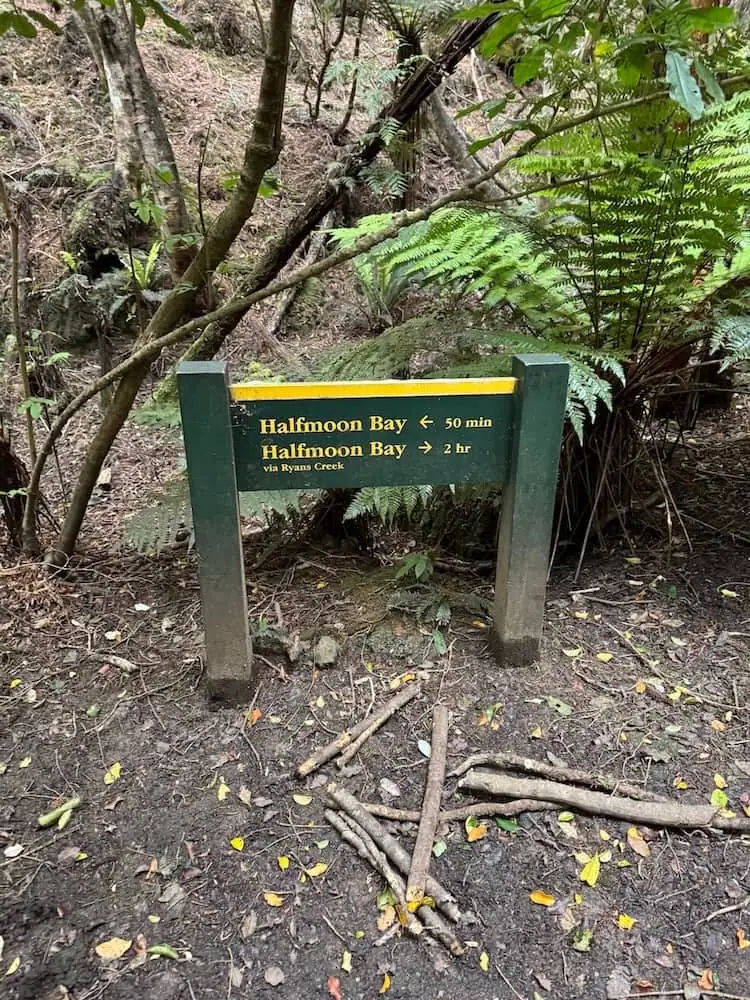
I've heard the longer way is nice, but at that point I was tired and ready to get back to town more quickly so opted for the more direct route.
Like the start of the track, this other end of the Rakiura Track lies a bit outside of the town of Oban. However, from this end, it's only about a 20-minute walk back to town alongside pretty quiet roads.

Other Things to Do in Stewart Island
Aside from the Great Walk, Stewart Island has loads of things to do! It's worth spending an extra day or two there if you can, especially if you want to see a kiwi bird.
Here are a few main things I recommend:
- Guided Kiwi Tour: If you want the best chance of seeing a kiwi in the wild, this tour is it! This is one of my favorite things I've done in all of New Zealand. I was able to see a kiwi, and I also enjoyed the chance to see other New Zealand wildlife from the boat before we went looking for kiwis.
- Ulva Island Tour: No visit to Stewart Island is complete without visiting Ulva Island. This island is a beautiful bird sanctuary that's completely predator free. I was glad to go with a guide on this tour so I could learn more about the birds here.
Frequently Asked Questions
Here are some answers to frequently asked questions when it comes to the Rakiura Track.
How hard is the Rakiura Track?
The Rakiura Track is considered to be one of the easier Great Walks in New Zealand. However, that doesn't mean it's easy. You need to be prepared to walk up to 8.08 miles (13 km) in one day while wearing a somewhat heavy pack.
Is the Rakiura Track worth it?
While it may not have some of the spectacular alpine scenery that makes some of the other Great Walks so special, the Rakiura Track is worth it if you're looking for a quieter Great Walk, want to enjoy New Zealand's incredible native birds, and are looking for incredible night skies.
Is the Rakiura Track muddy?
Yes, the Rakiura Track is typically fairly muddy. Between the Port William and North Arm Huts and Campsites, you can expect to find a fair bit of mud. When I did this walk, there were a few times when the mud got halfway up my shin.
Can you do the Rakiura Track in one day?
You could theoretically do the Rakiura Track in one day, but it would be very strenuous. Most people walk the Rakiura Track over the course of three days.
What is the Rakiura Track length?
The Rakiura Track is technically 19.9 miles (32.1 km) from its start and end points. However, many people walking the track choose to start and end in Oban, which is about 24.3 miles (39.1 km).
Start Booking Your Walk on the Rakiura Track
There you have it! Now that you've read through this guide, why don't you start booking your walk now? Accommodation can fill up very quickly on Stewart Island, so the sooner you book, the better!
➡️ Book Your Campsites/Huts on the Great Walk Here (note this website does not work if you have a VPN turned on)
Read More About New Zealand Travel Essentials
- 40 Must-Know New Zealand Travel Tips for a Smooth Trip
- Driving in New Zealand: Tips from a Once-Nervous American
Read More About the Great Walks
- NZ Great Walks Packing List for Women (What I Pack)
- Routeburn Track in 2 Days From Te Anau: My Solo Hiking Guide
- Kepler Track in 3 Days: My Solo Great Walk Itinerary
- Te Anau Accommodation: Hotels, Hostels & Camping
- Rakiura Track Guide: 3 Days Camping on Stewart Island Solo
- Stewart Island Accommodation: Where to Stay for Every Budget
- 8 Best Things to Do on Stewart Island I Actually Loved
Read More About South Island Travel
- 11 Things to Do in Te Anau: More Than Just a Milford Gateway
- Doubtful Sound Overnight Cruise Review
- Te Anau Accommodation: Hotels, Hostels & Camping
- Fox Glacier Heli Hike Review: Is it Worth It in 2026?
- Roy’s Peak Sunrise: A Bucket List Hike Worth Waking Up For
- 8 Best Things to Do on Stewart Island I Actually Loved
- Stewart Island Kiwi Tour Review: Is it Worth it?
- How to Get to Stewart Island: I Tried the Flight & Ferry
- Stewart Island Accommodation: Where to Stay for Every Budget
