
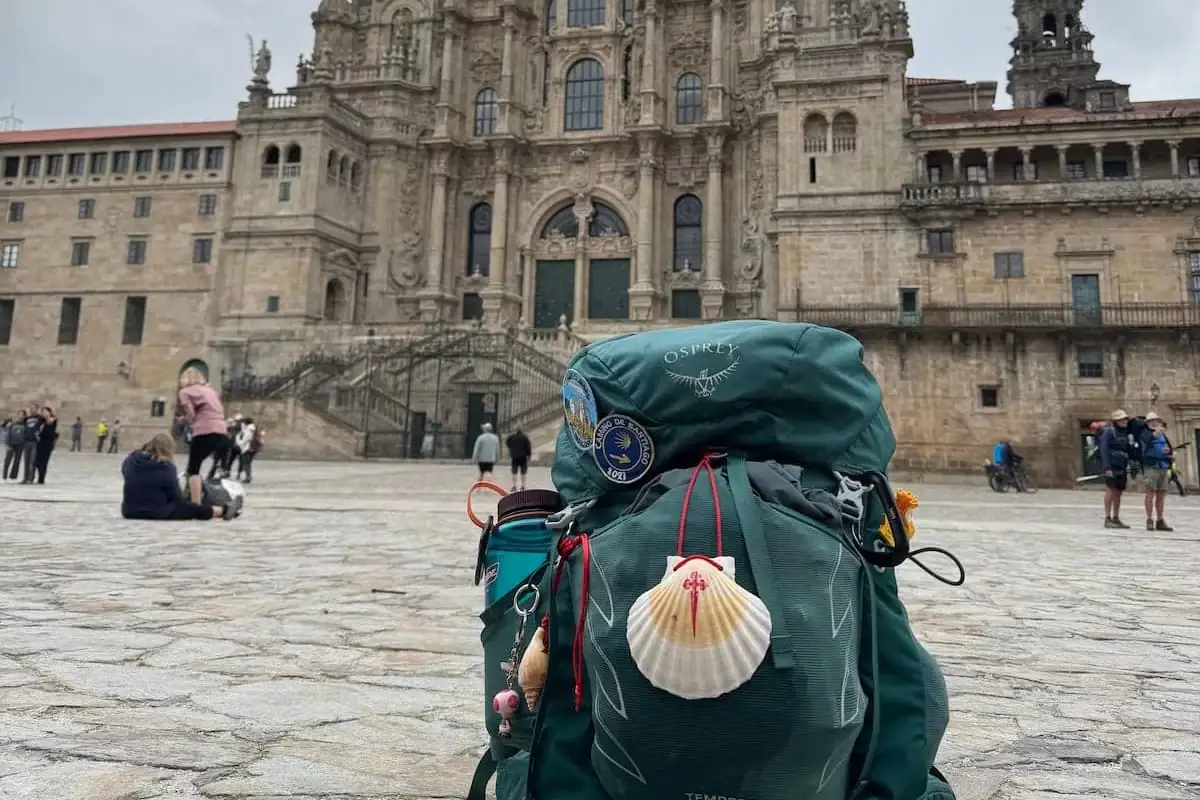
Camino de Santiago Backpack Guide: Survey Picks + Tips


Along with shoes, choosing the right Camino de Santiago backpack is one of the most important decisions for you to make before starting your pilgrimage. While the Camino isn’t a wilderness thru-hike requiring you to carry quite so much gear, choosing the right pack can still really help make your days feel so much easier.
After hiking three different Camino routes solo myself, covering over 800 miles (1,300 km) on the trail, I’ve found a backpack I genuinely love. But since I'm just one person and there are so many great packs out there, I also polled around 200 other pilgrims on their favorite backpacks for the Camino.
Keep in mind that there's no single best backpack that's right for everyone. Finding the right pack is a very personal decision and unique to each person.
For that reason, I put together this guide to walk you through various topics to help you find a pack that might work well for you, like:
- What Camino de Santiago backpack size you actually need
- Features to consider when choosing a pack
- My full review of the Osprey Tempest 33, my go-to pack
- Other popular packs to consider based on my pilgrim survey
- How much your pack should weigh
- And more!
Whether you’re prepping for your first Camino or planning a second walk and looking for new gear, this guide is here to help.

Top Camino Backpacks at a Glance
Don't have time to read this full article? No worries. Here are my picks for best Camino de Santiago backpacks based on my pilgrim survey:
- Writer's Choice: Osprey Tempest/Talon 33
- Budget Pack: REI Co-op Trail 40
- Easiest to Organize: Osprey Sirrus/Stratos 34
- Top Ultralight Pack: Gossamer Gear Kumo 36
- Hydration Pack with a Water Reservoir: Osprey Mira 32/Manta 34
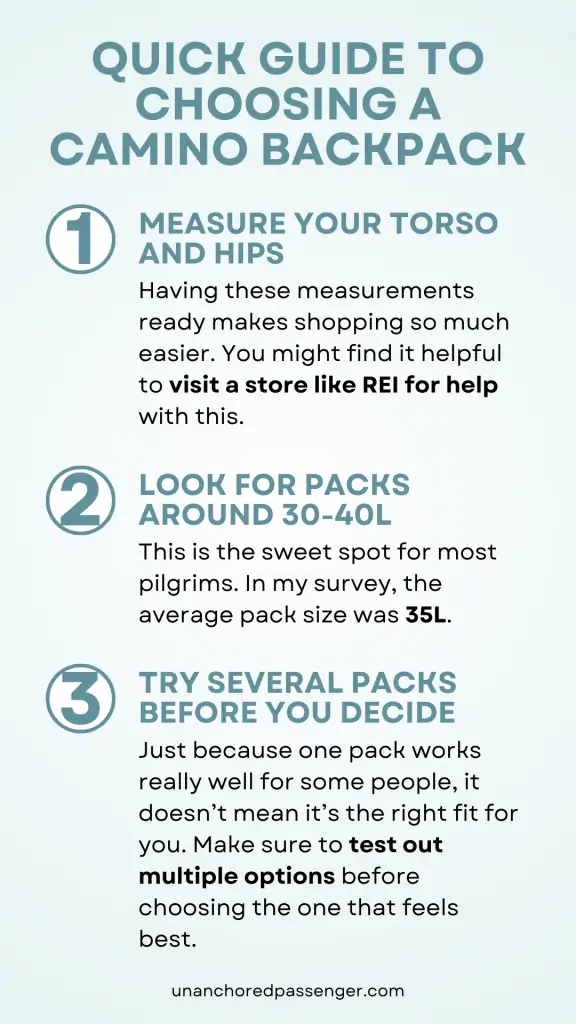
Why Your Camino Backpack Matters
Your shoes and your backpack are the two most important gear decisions you’ll make as you get yourself ready for the Camino.
Thankfully on the Camino you don't have to carry camping gear or a week's worth of food. You just need to focus on the essentials like clothes, toiletries, rain gear, your Camino passport, a water bottle, etc.
However, even with carrying only those essentials, the weight adds up and can really take a toll on your body day after day if you don't have the right pack.
A poorly fitted pack can lead to shoulder pain, sore hips, chafing, and fatigue you did not sign up for. A well-fitted one? It feels surprisingly manageable… even on long days when you’re already tired.

What Size Backpack Do You Need for the Camino de Santiago?
This is one of the most common questions I get and for good reason. There are SO many pack options out there, and if you've never done something like this before, it can feel really overwhelming trying to figure out what you'll need.
Ultimately, you want something that should fit all your gear without having too much extra space (but just enough for a few snacks). But how big is that exactly?
The Sweet Spot: 30-40 Liters
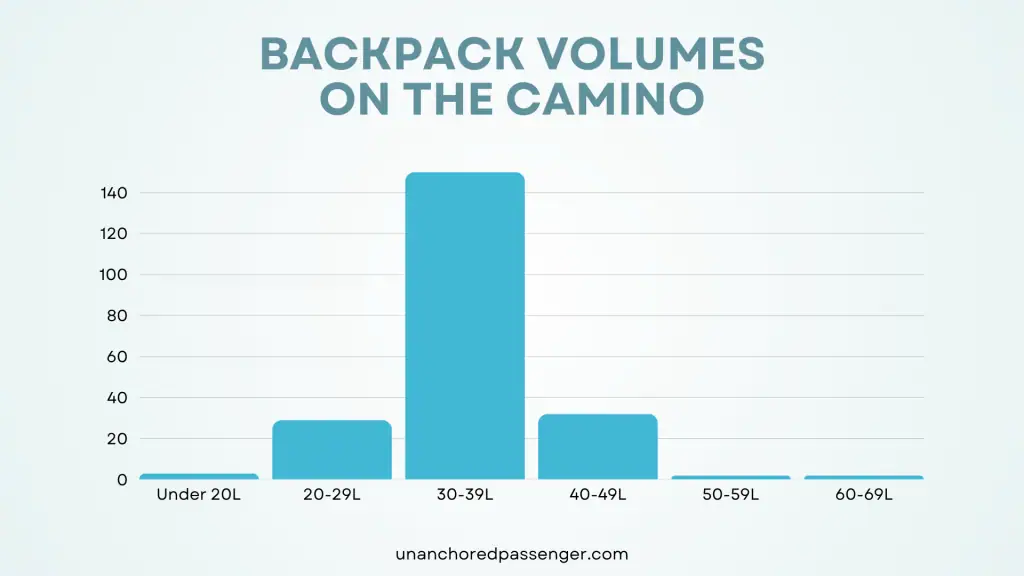
For most pilgrims, especially if you’re walking between April and September, a 30–40L backpack is perfect.
My survey results back this up with 67% of people saying they've used or plan to use a 30-39L pack on the Camino. And among survey participants, the average volume is 35L.
If you're walking in summer, I think you can even get away with a pack on the lower end of that range.
Anything bigger than 40L becomes a trap: you’ll fill the space simply because it’s there. And while some pilgrims go smaller than 30L, you might find it difficult unless you're extremely minimalist or already have some ultralight gear.
When You May Want Closer to 35-40 Liters
If you're hiking in some cooler months and need a sleeping bag and warmer layers, it might be better to carry a bag with slightly more volume.
As much as I love my 30 liter pack, I think it could be difficult to fit a sleeping bag in it if I didn't cut back on some of my other gear. I know people who have done it though!
Getting a pack closer to 40 liters might also be beneficial if you're looking for a single pack that you could also use in the future when backpacking with a tent.
Connect with Other Women Hiking the Camino
Join my free Facebook group! We're building up a community of women who have hiked or are planning to hike the Camino there. You can also get personalized support from me!
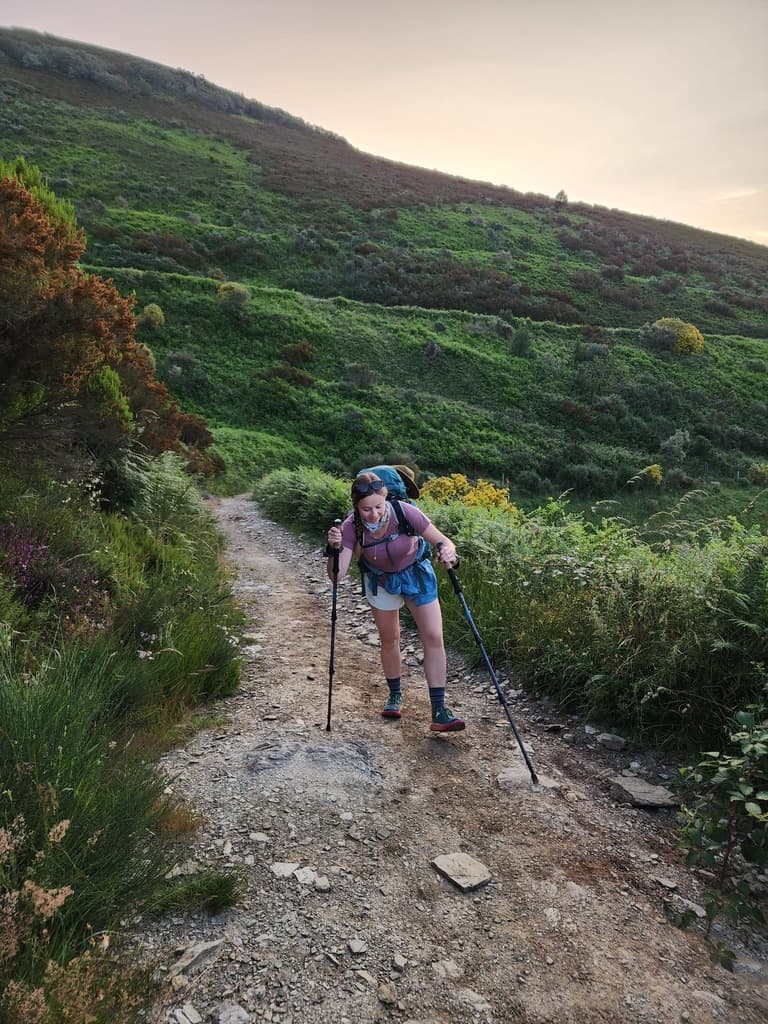
Features to Look For in a Camino Backpack
Ultimately, everyone's bodies and preferences for a backpack are different. So while I'll include some popular backpack choices later in this article, I want to walk you through various features to consider to help you evaluate which pack is right for you.
1. Torso Length Fit
This is arguably the most important part of backpack comfort. Finding the right backpack size really depends on your torso length far more than your height.
Here's how to measure your torso length for a backpack:
- Look down to find the bone that sticks out at the base of your neck in the back
- Find the spot between the center of your hip bones in your back
- Measure the distance between those two points
This can be quite difficult to do on your own. Even for me, when I had my mom help me, I got a WILDLY incorrect number.
If you can, I recommend going to a store like REI where a professional can help get you sized correctly.
Having the right measurement here will help ensure you try on backpacks in the right size.
Note that as you look at packs, some have adjustable torso lengths, like many of Osprey's packs. This can help you get an even more exact fit. That said, many packs out there without adjustable torso lengths will work for a range of folks.
2. A Supportive Waist Belt
Your hips should carry most of the weight, not your shoulders. You'll want to look for:
- Hip belts that you can synch fairly tightly around your hips–the padding should be roughly centered over your hip bones
- Thick hip padding for comfort
- Easy-to-adjust buckles
- Hipbelt pockets that can fit your phone

3. Comfortable Shoulder Straps
While your shoulders shouldn't carry too much of the pack's weight, they will have some. You definitely want to find straps that are comfortable for you.
I encourage you to look for straps that have some soft padding. You might also want to try different strap shapes to see what works best. Some packs, like Deuter's SL models, have more “S shaped” straps that some women find more comfortable.
4. Pockets
Think about how you'd like to keep your gear organized in your pack. Do you want more pockets or would you rather save weight by keeping them minimal?
For pockets that you'll want to use while hiking, like side water bottle pockets, check to see how easy it is to access your gear while wearing the pack. Some packs do this better than others, and when you're hiking for hours in hot weather, you're going to want to be able to easily access your water.
For backpacks with more pockets for organization, you may want to check out packs like the Osprey Sirrus/Stratos 34, Gregory Jade/Zulu 28 LT, REI Co-op Trail 40, and Deuter Futura.

5. Rain Protection
No backpack is truly waterproof. Some may be more water resistant and may not necessarily need a pack cover for the outside but should definitely have a pack liner on the inside to protect your gear.
Others may get too heavy when wet so should have a pack cover to protect the entire pack from the rain. Some packs will come with them while others don't, so keep in mind that this may be an additional gear purchase.
Buy Backpack Rain Protection Here
➡️ Here's the rain cover I use from REI ($27.95+).
➡️ Here's the Osprey pack liner I'm trying out ($42.50+).
➡️ I'm also testing a cheaper pack liner option like this ($2.40+).
6. Ventilation
Either way, you're going to sweat while hiking with your pack. But some packs do better with others when it comes to ventilation that helps reduce that sweat.
A lot of the bigger backpack brands will have features making them more breathable. Osprey, for example, has their AirScape® system that this really well and is one of my favorite features about their packs. It provides some space between the pack and your back, allowing a place for sweat to escape.
That said, some people find packs with ventilation systems like this less comfortable to carry than those that sit directly on their backs. Also, if you're looking for a more ultralight pack, this is a feature it might skip.
7. Weight
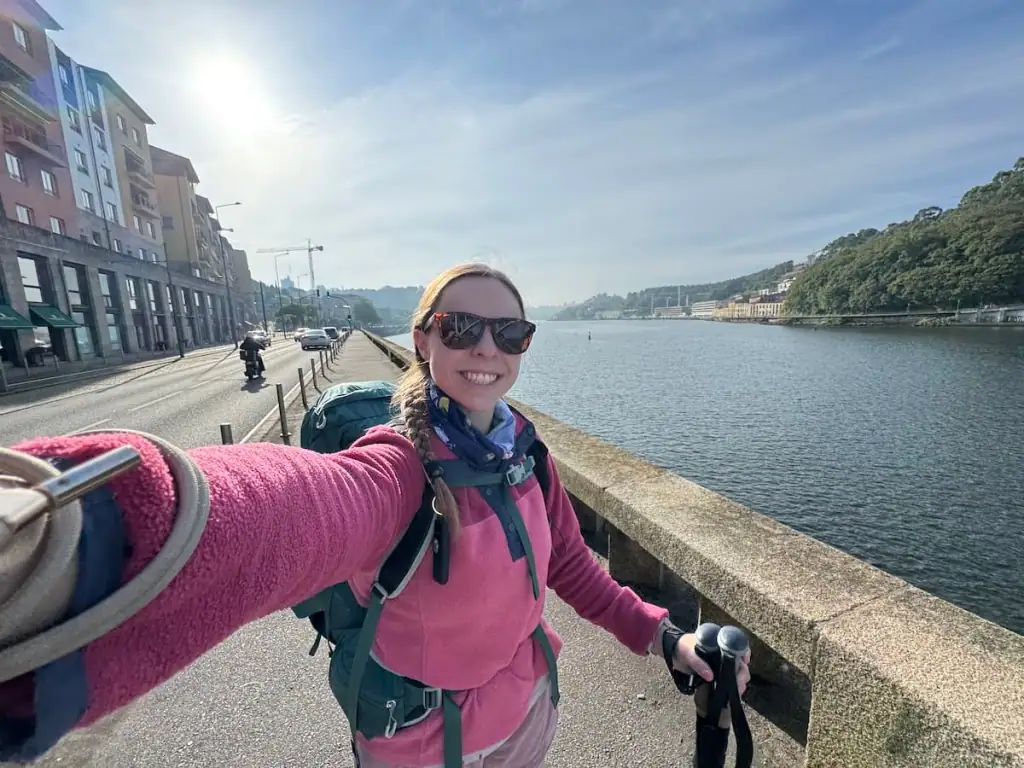
I wouldn't worry too much about the weight of your Camino backpack while it's empty, but it's something to keep an eye on. I'd say any pack that's roughly around 2-3 pounds (0.9-1.4 kg) should be fine.
Many of the packs included on later in this article fall within that range, but a few packs are a bit heavier, especially the more durable Osprey Kyte/Kestrel at about 3.9 pounds (1.8 kg) for the women's XS/S size.
You want a pack that's lightweight but still has enough features to make carrying the weight of your gear comfortable.
8. Return Policy
Especially if it's your first time doing something like this, I think it's best to buy your pack from a store like REI since you can easily return the pack as a Co-op member, even if you use it.
While there are some other amazing packs out there, they don't have as generous of return policies. And some of them, especially from smaller companies, may have pricey shipping fees that may make returning the pack more difficult.
That's why I think it's best, especially if this will be your first pack for a multi-day hike, to go with something that you can more easily return if needed.
My Go-To Camino Backpack: Osprey Tempest 33 (or Talon 33 for Men) Review
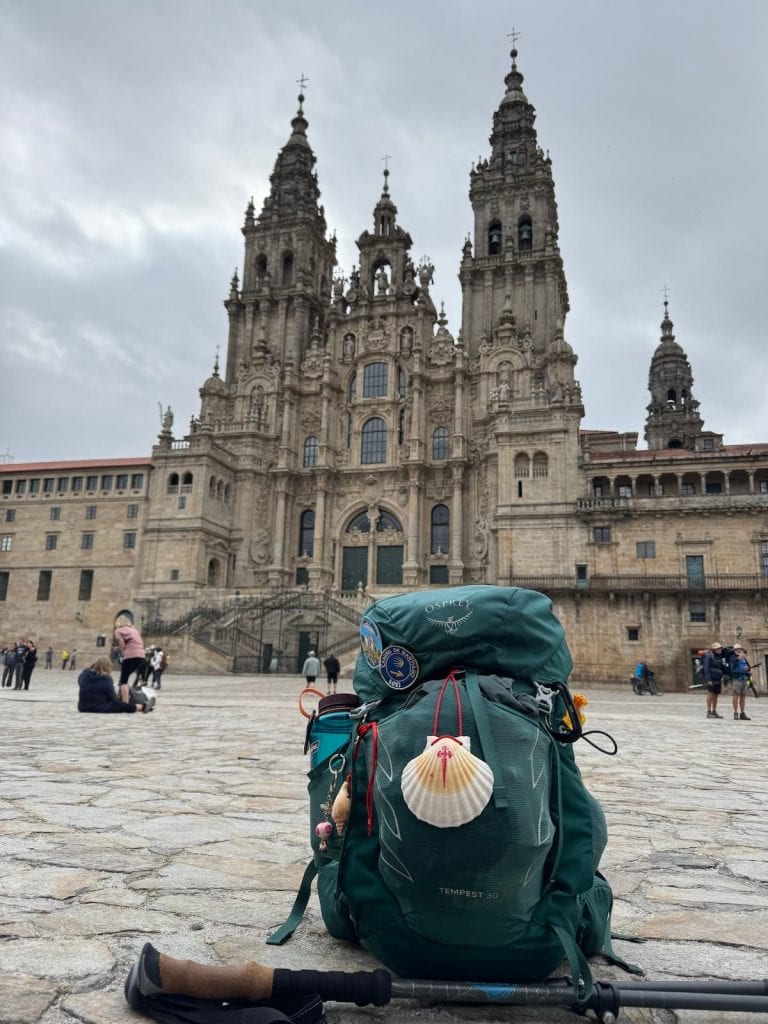
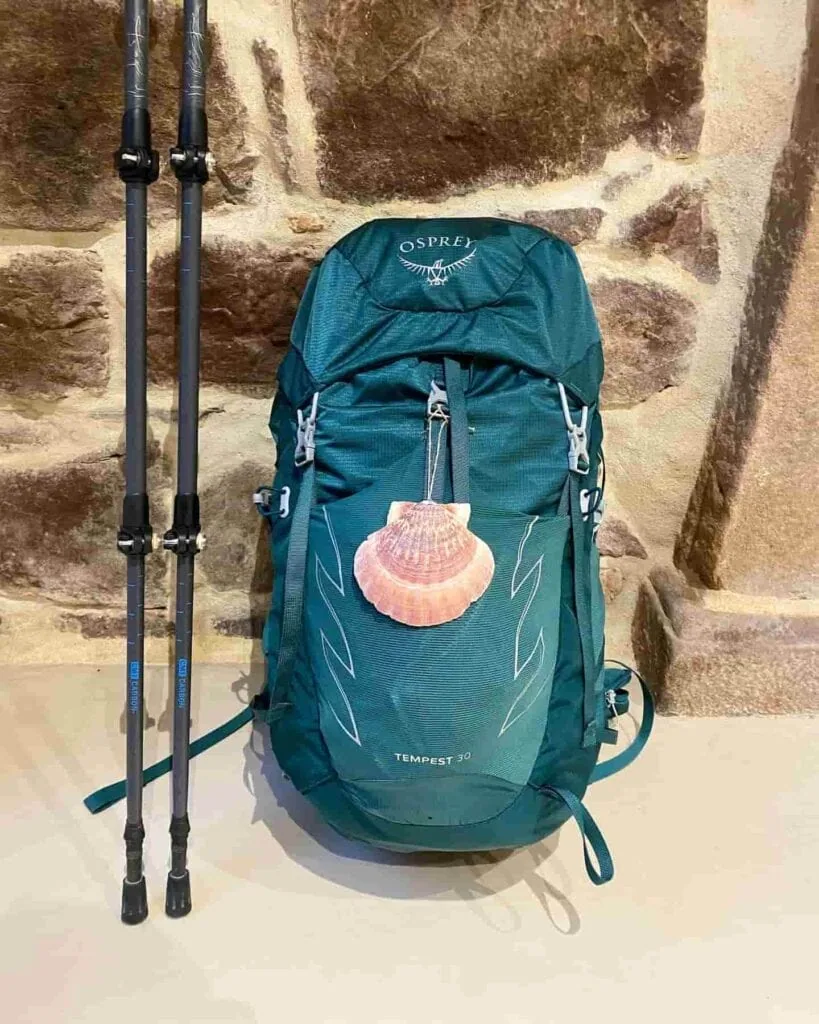
I’ve used my Osprey Tempest 30 on three Caminos now plus on Mount Kilimanjaro and dozens of day hikes. The latest version is 33 liters, but it's quite similar to my version of the pack.
I'm not the only one who loves this pack either. This was the second most popular pack among the approximately 200 pilgrims who participated in my survey. 13% said they've used this pack on a Camino or plan to.
Note that this post is NOT sponsored by Osprey in any way–I just really love this pack and think it's a great option, especially for first time pilgrims.
If you prefer a video format, you can watch my pack review here:
Women's Osprey Tempest 33 Pack Specs
- Volume: 33L
- Weight: 2.65 pounds (1.2 kg)
- Load range: 10-30 pounds (4.5-13.6 kg)
- Materials: 100% recycled nylon, bluesign® APPROVED
- Price: typically around $200 USD
The newest version now has one universal size, and the hydration sleeve is inside the main compartment instead of outside.

What I Love About This Pack for the Camino
Here are my favorites things about this pack:
- There are plenty of pockets to stay organized.
- The pack has a super comfortable women's-specific fit.
- It's lightweight but seems pretty sturdy.
- The AirScape® back panel helps reduce sweat between your back and the pack
- It's the perfect size for spring–fall Caminos.
- The pack is fairly versatile, working well for the Camino and also day hikes.
- Osprey offers a lifetime functional repair warranty.
- There are a variety of great color options.
- It's easy to buy from REI, which means if you're a Co-op member, you can get cash back on your purchase and even return the pack after trying it out if it's not a good fit.
- As a bluesign® APPROVED product, it's made in a way that's environmentally friendly and ethical.
The Osprey Tempest also fits everything in my Camino packing list perfectly without encouraging overpacking.
What I Don’t Love About the Pack
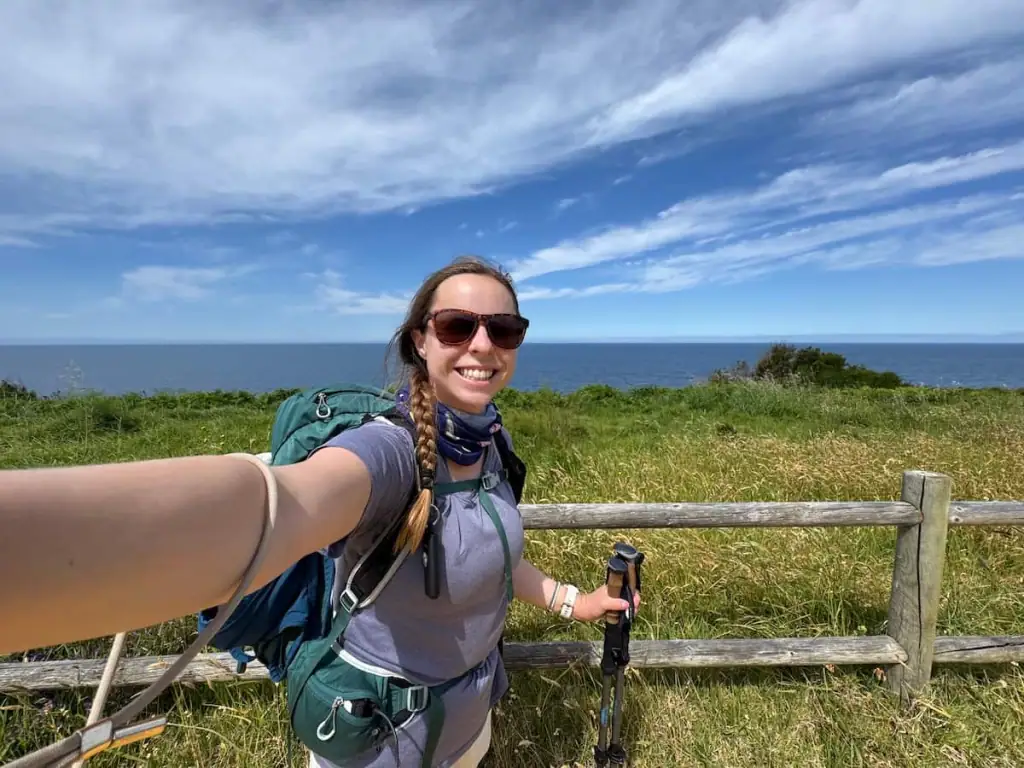
I don't know if any pack out there would be 100% perfect for one person. As much as I love this Osprey pack, there are just a few things I don't love about it. However none of them are dealbreakers:
- The hip belt pockets are a bit difficult to open, and it's a slight struggle to get my phone inside.
- The front strap pocket feels a bit too small for my liking.
- The trekking pole attachment is slightly awkward to me.
- I find it difficult to get a hydration bladder in the pack, but Osprey did change the placement of it in the latest version so that may be better now.
Now that there's only one size, this pack won't necessarily fit everyone. That said, if you're a woman with a longer torso, I imagine you could try out the Talon and see how it feels even though it's a “men's pack” (or vice versa).
Hiker Survey Results: Camino de Santiago Backpacks
Now, let's get to the rest of the survey results! Like I said in the beginning, everyone is different and will need different packs. So as much as I love the Osprey Tempest 33, it may not necessarily the right pack for you.
I encourage you to try multiple packs before you decide which one to keep for your Camino.
Ok but which others backpacks should you look into for the Camino??
I found myself asking the same question. That's why I decided to conduct a poll so I could get real firsthand accounts from other pilgrims on the backpacks they like for the Camino.
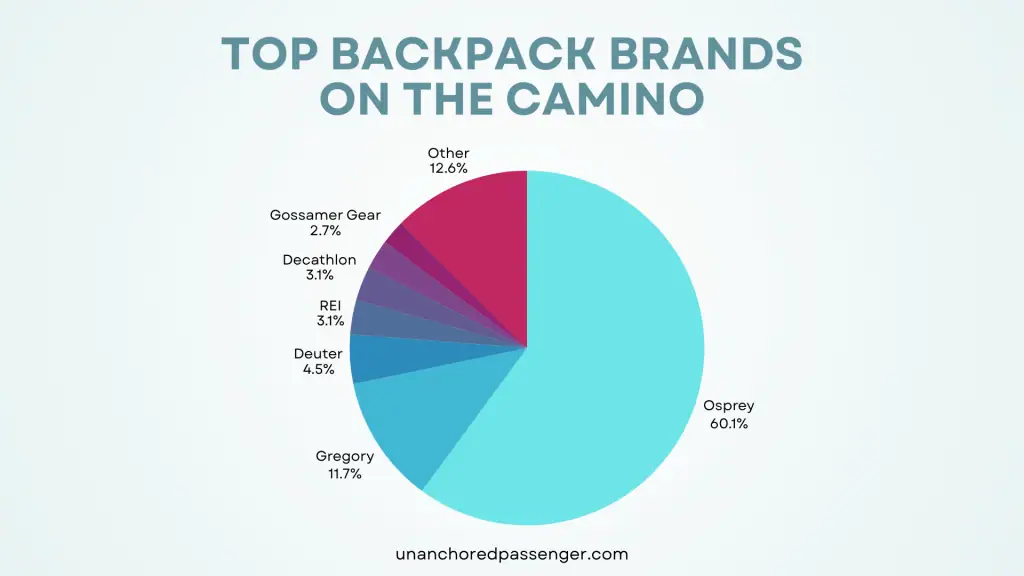
Most Popular Backpack Brands for the Camino de Santiago
Now before we dive more into backpacks, let's start with brands. As you think about which packs to try, I recommend testing out at least a few different brands to see what feels best to you.
Oftentimes the feel of backpacks within one brand will be somewhat similar, so if you start with brands, you can get a sense of which packs might feel best on your body and then narrow down the exact model from there.
These are the brands that were most popular among my survey respondents:
I will note that a large segment of my survey respondents were from the U.S., so it's not a surprise to me to see such a popular U.S. backpack company at the top of this list. If more folks from throughout Europe had responded, I imagine the numbers for Deuter and Decathlon might be a bit higher.
Smaller Companies to Consider
While most of the brands popping up in this survey are much larger companies, you might consider checking out some of the small cottage companies like Gossamer Gear and Zpacks. Here are a few others I've been hearing a lot of great things about:
- Six Moon Designs (based in the U.S.)
- Durston Gear (based in Canada with a shipping warehouse in the U.S.) – I recently bought a tent and a larger pack from them. I've heard people really love their smaller packs too.
- Aarn Packs (based in New Zealand)
If you shop from any cottage companies, I would just carefully look at the weight carrying capacity of the pack as some are designed for ultralight hikers and don't all carry much weight well. I'd also look into any costs for shipping and returns as they may be higher than if you purchased from a larger company.
10 Top Camino de Santiago Backpack Recommendations According to the Survey
As promised, here are some of the most popular Camino de Santiago backpacks you might want to check out based on my pilgrim survey.
Just because these are popular, it doesn't mean these are necessarily the best fit for you. Think of them as a helpful starting place, but don't feel bad if you decide to go with something else!
Here's a quick overview on the top 10 backpacks from the survey (you may need to scroll to the right to see all the details). For more info on each pack aside from the Osprey Tempest/Talon 33, jump below this table.
| Backpack Model | Best For | Volume | Weight (for Smallest Model) | Carrying Capacity | Survey Place | Price |
|---|---|---|---|---|---|---|
| Osprey Sirrus/Stratos 34 | Staying organized | 34 | 3.04 pounds (1.38 kg) | 15-30 pounds (6.8-13.6 kg) | 1st – 13.9% | $187.19+ |
| Osprey Tempest/Talon 33 | Good all around | 33 | 2.65 pounds (1.20 kg) | 10-30 pounds (4.5-13.6 kg) | 2nd – 13% | $186.79+ |
| Osprey Eja/Exos 38 | Lightweight | 38 | 2.60 pounds (1.18 kg) | 20-25 pounds (9.1-11.3 kg) | 3rd – 6.7% | $179.95+ |
| Osprey Kyte/Kestrel 38 | Durability | 38 | 3.89 pounds (1.76 kg) | 20-35 pounds (9.1-15.9 kg) | 4th – 4.9% | $156.93+ |
| Gregory Jade/Zulu 28 LT | Staying organized | 28 | 2.36 pounds (1.07 kg) | Up to 25 pounds (11.3 kg) | 5th – 4.5% | $179.95 |
| Osprey Mira 32/Manta 34 | Hydration | 32/34 | 3.39 pounds (1.54 kg) | 10-30 pounds (4.5-13.6 kg) | 6th – 2.2% | $164.93+ |
| REI Co-op Trail 40 | Easy access to gear | 40 | 2.56 pounds (1.16 kg) | Up to 30-35 pounds (13.6-15.9 kg) | 7th – 1.8% | $149 |
| Gossamer Gear Kumo 36 | Ultralight | 36 | 1.18 pounds (0.54 kg) | Up to 20-25 pounds (9.1-11.3 kg) | 8th – 1.8% | $180 |
| Deuter Futura (Various Sizes) | Staying organized | 30-40 | 3.13 pounds (1.42 kg) | 8.82 – 18 pounds (4-8.2 kg) | 9th – 1.8% | $108.50+ |
| Deuter Trail (Various Sizes) | Good all around | 25-36 | 2.25 pounds (1.02 kg) | 8.82-15 pounds (4-7 kg) | 10th – 1.4% | $99.73+ |
Note: Some hikers reported using older packs that are no longer available. I did not include those here.
1. Osprey Sirrus/Stratos 34 – Great for Staying Organized
The Osprey Sirrus/Stratos 34 was the most popular pack among those I surveyed. If you take into account the number of folks using the similar 36L version that appears discontinued (at least in the U.S.), almost 1 in 4 respondents report using this pack.
Looking at this pack now, I can see why it's so popular. It has a lot of really unique pockets and quick access zippers to help you keep your things organized.
Pros: More compartments for organization, quick access zippers, women’s specific fit available, breathable with Osprey’s AirSpeed™ back panel, comfortable padded straps, rain cover included, lifetime warranty
Cons: No front mesh pocket
2. Osprey Eja/Exos 38 – Roomy and Lightweight
For a little bit more space, the Osprey Eja/Exos 38 can be a good option to consider. 7% of survey respondents reported using this pack.
Personally, I almost got the Osprey Eja 58 myself as I'd been looking into getting a larger pack for tent camping. I found it super comfortable and only ended up choosing something else because I wanted a more ultralight pack.
Pros: Lightweight, women’s specific fit available, breathable with Osprey’s AirSpeed™ back panel, comfortable padded straps, lifetime warranty
Cons: Not available at REI in this volume, extra space can make it easy to overpack, no rain cover included
3. Osprey Kyte/Kestrel 38 – Durable but Heavy
5% of my survey respondents said they use the Osprey Kyte/Kestrel 38.
This pack is one of Osprey's most durable, using 420D nylon in the main part of the pack and 500D in the bottom. Compare that to the Eja/Exos that only uses 100D since it's meant to be more lightweight.
This added durability makes the pack a bit heavier–the Osprey Eja 38 is 1.3 pounds (590g) lighter than the Kyte 28! You don't need this added durability on the Camino, but if you plan to use the pack for more intense adventures, then it's something to consider.
I actually tried out this pack myself before my first Camino after hearing a lot of good things about it. I didn't like how it felt on me though and preferred the feel of the Tempest so went with that instead.
Pros: High durability, women’s specific fit available, breathable with Osprey’s AirSpeed™ back panel, comfortable padded straps, rain cover included, lifetime warranty
Cons: Heaviest pack on this list, extra space can make it easy to overpack
4. Gregory Jade/Zulu 28 LT – Slightly Smaller Pack with Room for Organization
4% of survey respondents said they've used the Gregory Jade/Zulu 28 LT. To me, this pack looks somewhat similar to the Osprey Sirrus/Stratos with some nice pockets for organization. However, this pack is slightly smaller in volume and quite a bit lighter in weight.
Pros: More compartments for organization, quick access zippers, women’s specific fit available, breathable with Gregory’s VaporSpan back panel, comfortable padded straps, lightweight, lifetime warranty
Cons: Not available at REI in this exact model, volume might be too small for some people, no front mesh pocket, back panel is not adjustable in the LT version, no rain cover included
Buy the Gregory Jade/Zulu 28 LT Backpack
➡️ From Amazon: Women's ($179.95) | Men's ($179.95)
➡️ Shop Similar Models at REI
5. Osprey Mira 32/Manta 34 – Hydration Pack with a Water Reservoir
If you think you'd like to walk your Camino with a hydration bladder instead of water bottles but don't yet have one, this pack could be a good option to check out since it comes with a 2.5L hydration bladder.
While most packs include a place to put a hydration bladder, they don't typically include the bladder itself. And even if you do have a bladder already, it may not necessarily fit in your pack well. I can definitely see the pros to buying something like this so you know they're compatible.
2% of survey respondents said they've used this or plan to on the Camino.
Pros: Includes a 2.5L water reservoir, more compartments for organization, women’s specific fit available, breathable with Osprey’s AirSpeed™ back panel, comfortable padded straps, rain cover included, lifetime warranty
Cons: Slightly heavier pack
6. REI Co-op Trail 40 – Affordable Pack with Easy Access Zipper
For more affordable packs that still typically perform well, you might consider checking out REI. 2% of pilgrims I surveyed use this REI Co-op Trail 40 pack.
This pack is highly rated, and I love how easy it looks to access the main compartment with its large zipper.
Pros: Most affordable option on this list, large zipper opening for easy access, more compartments for organization, women’s specific fit available, lightweight, rain cover included
Cons: Some people say the hip belt pockets are a bit small, extra space can make it easy to overpack, no lifetime warranty
Do you live in Europe? You might check out Decathlon's backpacks instead. They're also quite popular and tend to be more affordable.
7. Gossamer Gear Kumo 36 – Most Popular Ultralight Pack
Six people I surveyed reported using a Gossamer Gear pack with about 2% of respondents using this model. I was a bit surprised to see a pack from a small cottage brand showing up with this many responses, but I guess I shouldn't be because I keep hearing about how folks love their packs.
I almost tried one of their larger packs myself for some upcoming backpacking trips with a tent. The only thing that stopped me was that I had already tried about half a dozen other packs and fizzled out with my motivation to try any others.
Note that this is a frameless pack, which means the pack has less structure and support in place. This helps keep the pack lightweight but means it doesn't carry heavier loads as well.
Pros: Lightest weight pack on this list, comfortable padded straps, shoulder strap pockets
Cons: Not available at REI, no gender-specific fit, max carrying capacity of 25 pounds (about 11 kg) so may not be as comfortable as you approach that weight, no rain cover included, no lifetime warranty
Buy the Gossamer Gear Kumo 36 Backpack
8. Deuter Futura (30, 32, or Pro 40) – Great for Staying Organized Without Sacrificing a Front Mesh Pocket
While no specific Deuter model had huge numbers of pilgrims in my survey reporting using them, this brand of pack is quite popular on the Camino. If you combine the Deuter Futura 30, 32, and Pro 40, about 2% of pilgrims who responded to my survey said they use one of these packs.
To me, this pack looks a bit similar to the Osprey Sirrus/Stratos and Gregory Jade/Zulu but without sacrificing the front mesh pocket! If you like the features of these packs, then you may want to try all three and see which feels best.
Pros: More compartments for organization, quick access zippers, breathable with Deuter’s Aircomfort back panel, women’s specific fit available in some volumes, rain cover included, lifetime warranty
Cons: Not available at REI
9. Deuter Trail (25, 28, 30, or Pro 36)
The Deuter Trail is another popular model with 1% of my survey respondents saying they use the 25, 28, 30, or Pro 36. While these numbers for Deuter seem a bit low, I imagine they'd be higher if more Europe-based pilgrims had responded to my polls.
To me, this looks like a great all-around pack, and it's nice it comes in a variety of volumes so you can really pick out whichever is right for you.
My dad has the Deuter Trail 30 that he's used on day hikes throughout New Zealand and out west in the U.S. and he really likes it. He loves how easily he can access gear with the front zipper opening.
The one downside, at least in his model, is there is only one side water bottle pouch. Personally, I don't think I would like that, but you could probably make that work on the Camino.
Pros: Front zipper opening, breathable with Deuter’s Airstripes back panel, women’s specific fit available in some volumes, rain cover included, lifetime warranty
Cons: Limited availability at REI
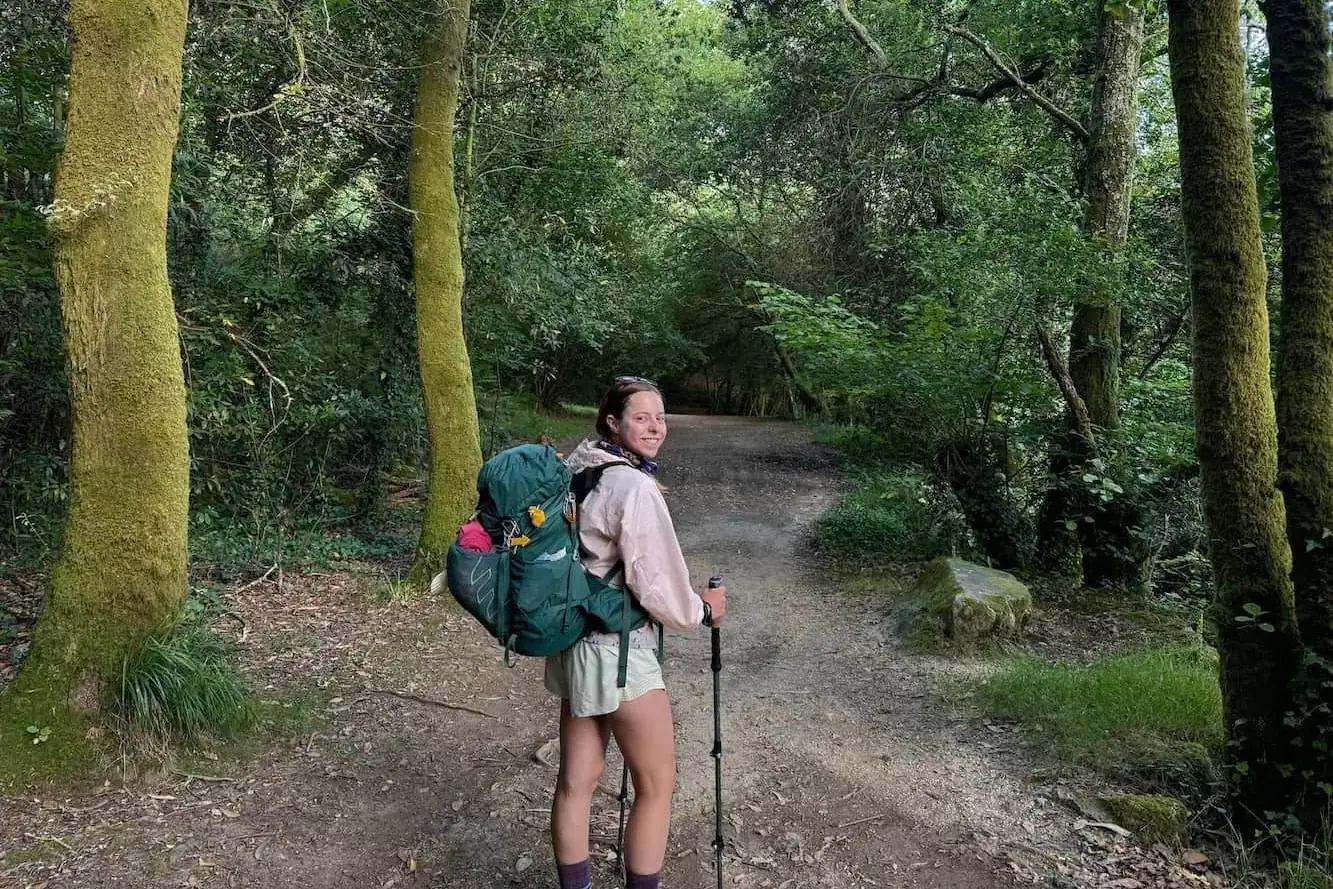
How to Fit Your Camino Pack Properly
Aside from finding the right size backpack for your body, it's so important to make sure it's fitted properly as well! A poorly adjusted pack will feel heavy and uncomfortable even if it's the right size.
Here are some tips for fitting your pack:
- Start with the waist belt. It should sit on top of your hip bones.
- Tighten the shoulder straps. They should be snug but not pulling.
- Adjust the load lifters. These should keep the pack sitting straight up and down and close to your body.
- Clip and adjust the chest strap. This shouldn't be very tight but should just be tight enough to have a bit of tension.
- Walk around with weight in the pack to make sure it feels right.
Properly fitting a pack can be a challenge sometimes. It's something I still struggle with myself from time to time.
If you're unsure about the fit, visit a store like REI to get help. It's so worth it, especially if it's your first time doing this.
If you can't make it in person to a store, don't worry! REI has a really helpful guide here to help you figure out fitting on your own at home.
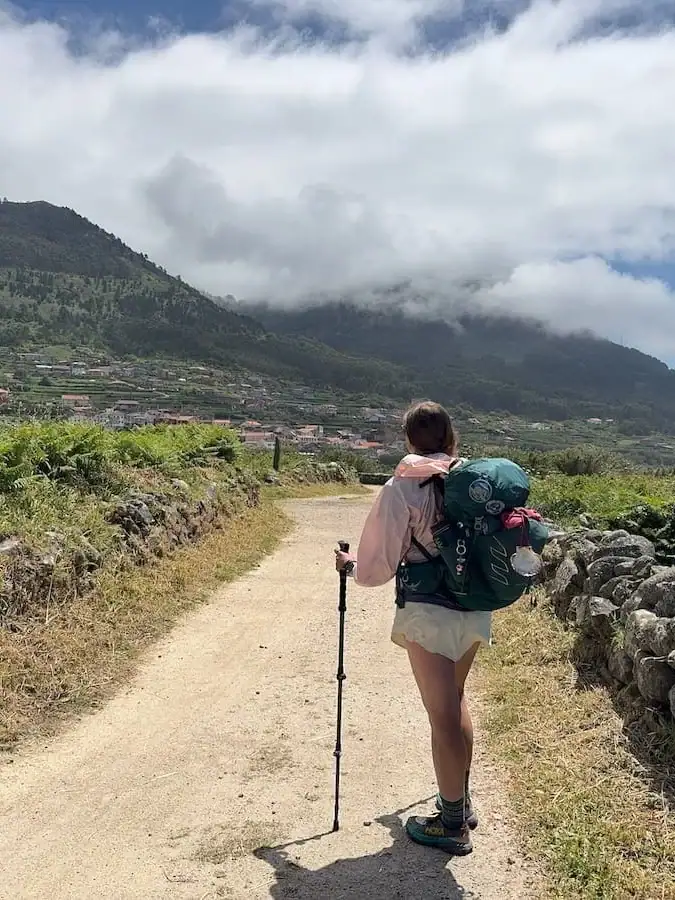
Your Camino Starts Now Training System
Imagine starting your Camino feeling ready instead of worrying if your body can handle it. Check out the Your Camino Starts Now Training System with a training guide, various training plans, and more to help you prepare.

What to Pack in Your Camino Backpack
Before you choose your Camino backpack, I think it's helpful to get the rest of your Camino gear together first. That way you can really see how it would all fit in a pack and see if it would work well for you.
I won’t go into every item here, but your pack should include:
- Clothes for hiking + town
- Rain gear
- Layers for cold weather
- Sleeping bag liner or sleeping bag
- Toiletries
- First aid and other 10 essentials
- A lightweight towel
- Water bottle
- Camino passport
If you want my full list, here’s my full guide on packing for the Camino with everything I brought on my own Caminos.

How Heavy Should Your Backpack Be on the Camino?
If you've ever been in any of the Camino Facebook groups or forums, you may see folks berating other pilgrims for their pack weight…
It's usually something like: “Your pack is WAY too heavy. It needs to be only 10% of your body weight.”
People LOVE to share this rule like it's the end all be all, but I call total BS on that. 💩
While that rule may be a good guide to give you a very general idea of what to possibly aim for, it's really no indication of what you're capable of carrying, nor is it realistic for many folks.
I mean if you're a small woman like me, it's going to be extremely difficult to follow that rule. To put in perspective, I'm usually carrying closer to 15-20% of my bodyweight personally.
How to Really Think About Pack Weight
Instead of fixating on an arbitrary rule, I encourage you to think about pack weight like this:
- Only bring the essentials and keep your pack as light as you reasonably can.
- Go on several walks of around an hour or so with your pack filled with everything you think you'll bring. This will help you really test out how your body does with that kind of weight and may encourage you to remove a few more things.
Remember that you’ll likely wash your clothes each day and will also often pass through towns with pharmacies and other shops on the Camino, so you truly don’t need much.
My Camino pack typically weighed around 20 pounds (9.1 kg) with water. It's definitely a bit heavier than it probably has to be, but at least for me, I find that weight manageable.

How to Protect Your Backpack When Flying
Many of the packs on this list can be carried onto flights, but double check the bag dimensions and your airline's policies to be sure.
However, if you plan to bring trekking poles, it might be easier to check your pack on your way to the Camino instead since many airports won't allow them through security.
I usually recommend carrying your pack on (at least for the way there) if you can and checking your poles in a separate bag with any extra items for before or after the Camino to be safe.
But if you do want to check your pack, I highly recommend getting something like this REI Co-op Pack Duffel. This will help protect your pack from any damage it might get if you check it without any kind of protection.
I say this as someone who learned my lesson after checking my Camino pack without putting it in another bag first. By the time my pack finally made it home after getting lost for a few days, it was covered in black scuff marks.
I've since bought that REI pack duffel to protect my packs when I fly now. It seems super durable and is also easy to fold up and pack away. Plus, it's quite large, so it makes it easy to pack some additional items, even when I'm using it for my larger 55L pack for other backpacking trips.
Buy the REI Co-op Pack Duffel
➡️ From REI Here ($49.95)
Backpack Transport on the Camino
Know that you don’t have to carry your pack every day on the Camino.
Companies like Caminofácil, Pilbeo, and Jacotrans will transport your bag for around €7-8 per day on the main Camino routes during the primary walking season.
You might find transport helpful if:
- You can't physically carry a heavy pack
- You’re injured
- You’re carrying electronics for remote work
- You need a break
- You packed slightly heavier than planned (it happens to all of us)
Many pilgrims carry their bags each day, but it's definitely nice to have the option for backpack transportation along the way if needed.
Note that if you do plan to get your pack transported at all, it's still important to carry some items with you for your own safety and wellbeing like:
- Water
- Snacks
- Sunscreen
- Rain gear
- Warm layers (yes, even in summer!)
- Headlamp and other 10 essentials
If you don't already have some kind of smaller pack to carry things with you when you send your bag ahead, here are a few options to consider:
- Most lightweight/packable: Cotopaxi Tago Del Dia Drawstring Pack–This could be a good option if you think you might only send your backpack ahead a few times.
- Small daypack: REI Flash 22–This was my first ever hiking pack. I find it works well for day hikes and packs down fairly small when you're not using it. I recommend something like this if you plan to send your main pack ahead regularly.
- Large hip belt: Sierra Designs Flex Lumbar Waist Pack–If you don't like backpacks, this could be a good option as long as you can fit your essentials in it. It even has a water bottle pocket!

Frequently Asked Questions
Here are some answers to frequently asked questions when it comes to choosing your Camino de Santiago backpack.
What size backpack do I need for the Camino de Santiago?
Most pilgrims do well with a 30-40L pack. For summer months, a pack around 30-33L is usually perfect.
How much should your backpack weigh on the Camino?
Keep your pack as light as possible without skipping any essentials. I don't like giving a specific weight range, but if I had to, I would say it's good to aim for around 15-20 pounds (6.8-9.1 kg) including 1L of water.
What’s the best women’s backpack for the Camino?
My top pick is the Osprey Tempest 33 thanks to its women-specific fit, organizational pockets, padding, and ventilation. However, everyone is different and what works well for some won't always work well for others. Be sure to try on a number of different packs and see what feels best for you.
Can you transport your backpack on the Camino?
Yes, you can transport your backpack on the Camino. Bag transport services like and Caminofácil, Pilbeo, and Jacotrans will deliver your bag to your next stop for about €7-8 per day.
Do I need a rain cover for my Camino backpack?
Yes, you will need to have either a rain cover, internal waterproof liner, or both for the Camino. Alternatively, some pilgrims opt for a poncho that fits over their backpack as well. Note that some backpacks come with rain covers while others don't.

Final Thoughts on Choosing Your Camino de Santiago Backpack
Finding the right Camino de Santiago backpack doesn’t have to feel overwhelming. Think about size, fit, weight, and the features that matter most to your body. Try a few on if you can because your comfort matters way more than just choosing whatever is the most popular
Whether you choose the Osprey Tempest 33 or something else, the most important thing is that it feels good once you’re actually walking.
Need Help Choosing a Pack?
Join my Camino de Santiago Solo Women's Facebook group for help. We're building a group of supportive women and are happy to share more experiences with backpacks on the Camino de Santiago if you have questions.
Next: Keep Reading About the Top Camino Shoes
In 2025 I polled almost 300 pilgrims to see their thoughts on the best Camino shoes. In this article, I share the top 14 shoes for the Camino based on those results and even more tips for choosing the right pair of shoes for your Camino.
