

NZ Great Walks Packing List for Women (What I Pack)


If you're wondering what to put on your NZ Great Walks packing list, I get it. Figuring out what gear you actually need (without overpacking, overspending, or ending up miserable in the rain) can feel pretty overwhelming, especially if it's your first backpacking trip as a solo woman.
Even if you've backpacked before, New Zealand comes with its own quirks. Weather changes quickly, mud often becomes a necessary evil, and many of the Great Walks take you into pretty remote areas where being properly prepared matters.
The good news? You probably need less gear than you think, especially if you're only planning to stay in huts.
I've now completed seven of New Zealand's Great Walks and am on a mission to finish all eleven while living here for a year. However, I didn't start out knowing what I was doing…
Before my first Great Walk, I had never done a true backpacking trip before. I spent countless hours researching gear, spiraling over packing lists, and trying to figure out what I actually needed versus what people on the internet just said I needed.
While I'm pretty happy with the gear I ultimately chose, I've definitely learned a few lessons the hard way. So in this guide, I'm sharing exactly what I’d pack again, what I’d leave at home, the gear that’s actually worth the weight, and the mistakes I wish I’d avoided before my first Great Walk.
New Zealand Backpacking Gear Video
Prefer to watch a video on this? I put together a video talking through all the backpacking gear I brought with me to New Zealand for the Great Walks and other hiking and camping adventures around the country.
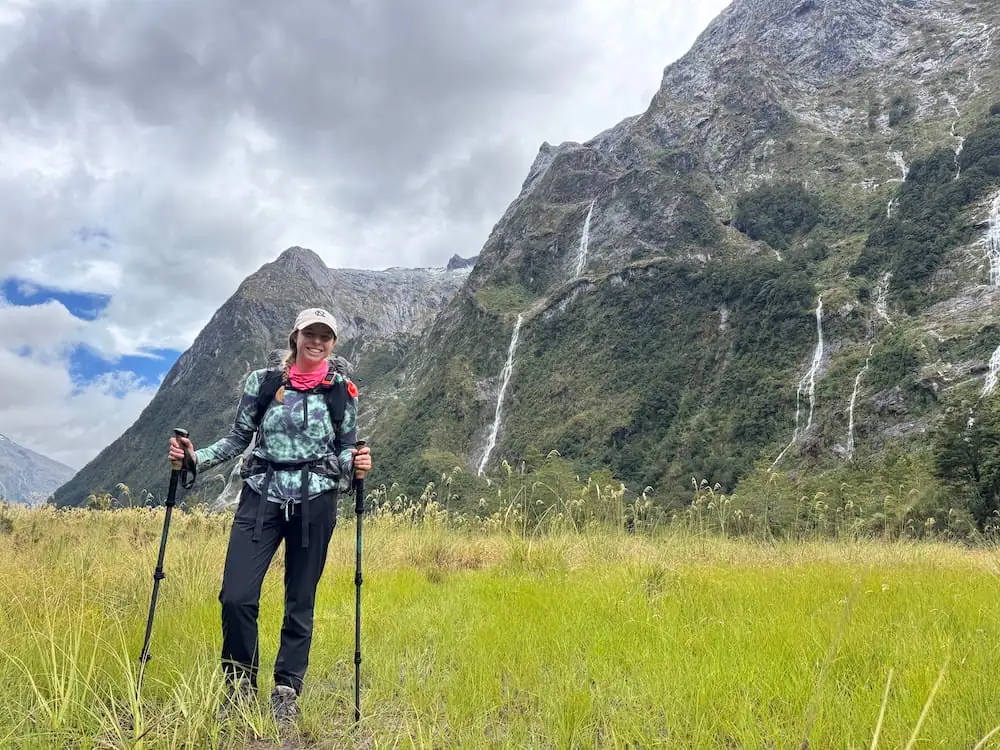
Women's Packing Tips for New Zealand's Great Walks
Before I share my recommended packing list, let's talk through some common questions and my top tips to help you sort through your gear.
How much should my pack weigh?
Pack weight is a very personal thing. For your base pack weight (without food and water), I'd aim to try to get it down to around 20 pounds (9 kg) or less if possible while still making sure you carry all the essentials.
New Zealand weather can be notoriously unpredictable, so my biggest piece of advice is making sure you DON'T skip on extra layers for warmth and rain. They may seem unnecessary if you're lucky enough to have nice weather when you leave, but you very well may need them later on in your hike.
A 20 pound (9 kg) base weight should be enough for your essentials while leaving plenty of additional room for food and water without making your pack too heavy.
Of course you'll find people who have much lighter packs, but they might have more expensive gear or will skip out on some “unnecessary comforts” like hut/camp shoes or entertainment like a Kindle.
Personally, my base weight for the Great Walks is usually around 14 pounds (6 kg) when staying in huts and 18 pounds (8 kg) when camping.
The total weight can really vary once you add in food and water, but here are a few examples of mine for reference:
- Three days in huts on the Kepler Track: 28 pounds (13 kg)
- Five days camping on the Abel Tasman Coast Track: 34 pounds (15 kg)
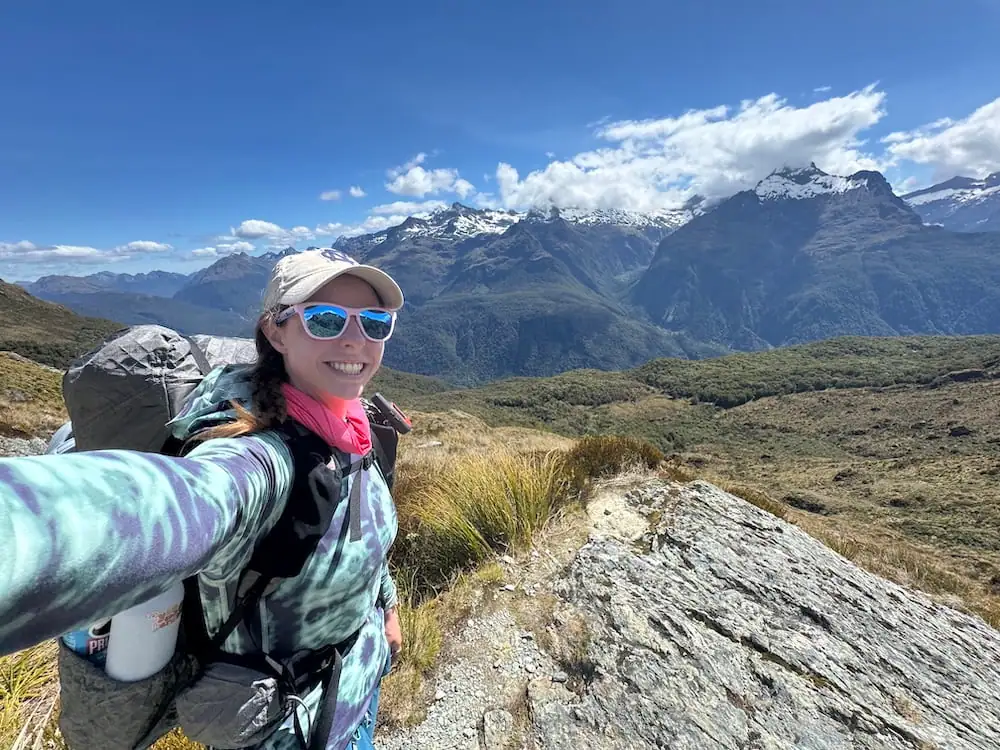
How do I find the right backpack for me?
Finding the right backpack is probably the most important part of your gear selection process. You want to find something that will feel comfortable wearing for hours on end while hauling all your gear.
I recommend getting a pack around 45-60L or so. If you plan to do camping with your pack, consider leaning towards the higher end of that range. Whereas if you plan to only stay in huts, you could get something on the lower end of that range.
My pack is 55L, and it's been the perfect size for me. It's just enough space to fit all my camping gear, but it can also roll down and get a bit smaller when I'm staying in juts and don't need as much room.
Ultimately, I recommend trying out at least several different packs. Make sure you put some weight in them as you test them out. Choose your pack based on whichever fits your gear best and feels best on your body.
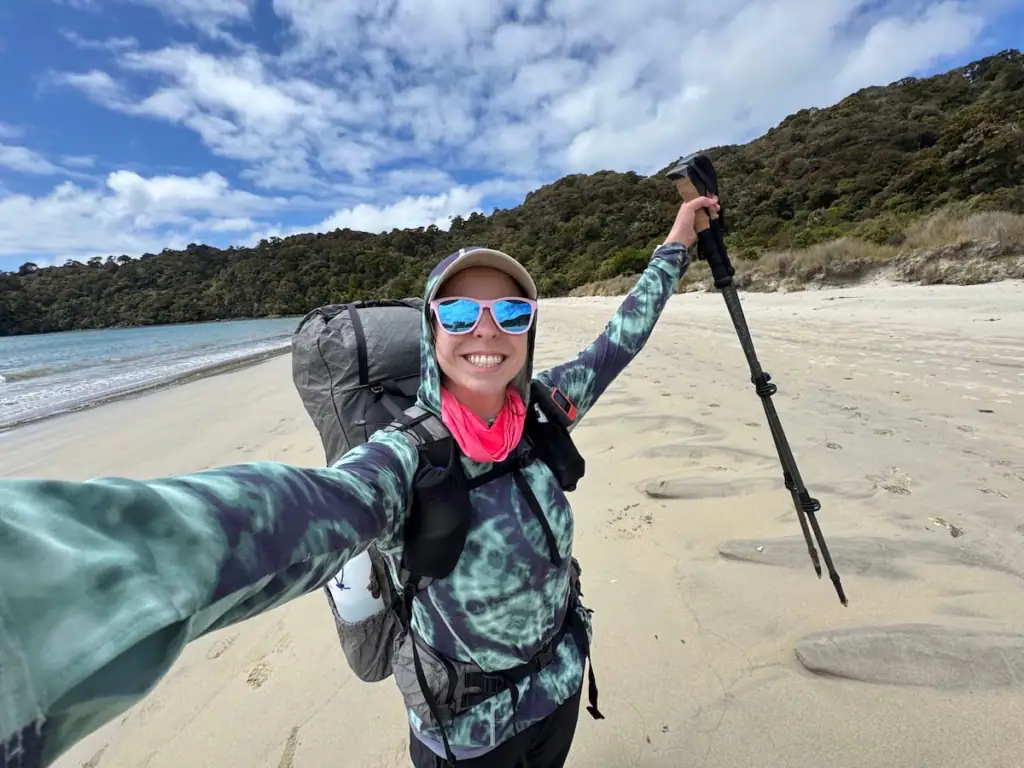
Which backpacks do you recommend for the Great Walks?
Selecting a backpack is a very individual choice and the right backpack for one person might not work for you. Here are a few options to consider, but don't feel like you have to stick with one of these:
- Durston Kakwa 55 – This is the pack I ultimately chose. I liked how it was one of the lighter pack options yet didn't sacrifice comfort completely like some of the really ultralight options out there.
- Osprey Eja 58 – I tried out this pack and was really torn between this one and the Kakwa.
- REI Co-Op Flash 55 – People rave about this pack. It's a good option to check out, especially if you're looking for something a bit more affordable.
- Gossamer Gear Mariposa 60 – I heard such great things about this pack and would have tried it out had I not found my pack sooner.
- Aarn Packs Mountain Magic 50 – If you want to support a New Zealand-based company when getting your pack, consider this one from Aarn Packs. The company is known for their unique pack designs with bigger pockets on the front that help balance the pack weight a bit more.
Shop Backpacks
I recommend starting your search at REI since they have a generous return policy, allowing returns for members even if you've used the gear!
➡️ Shop Backpacks at REI Here
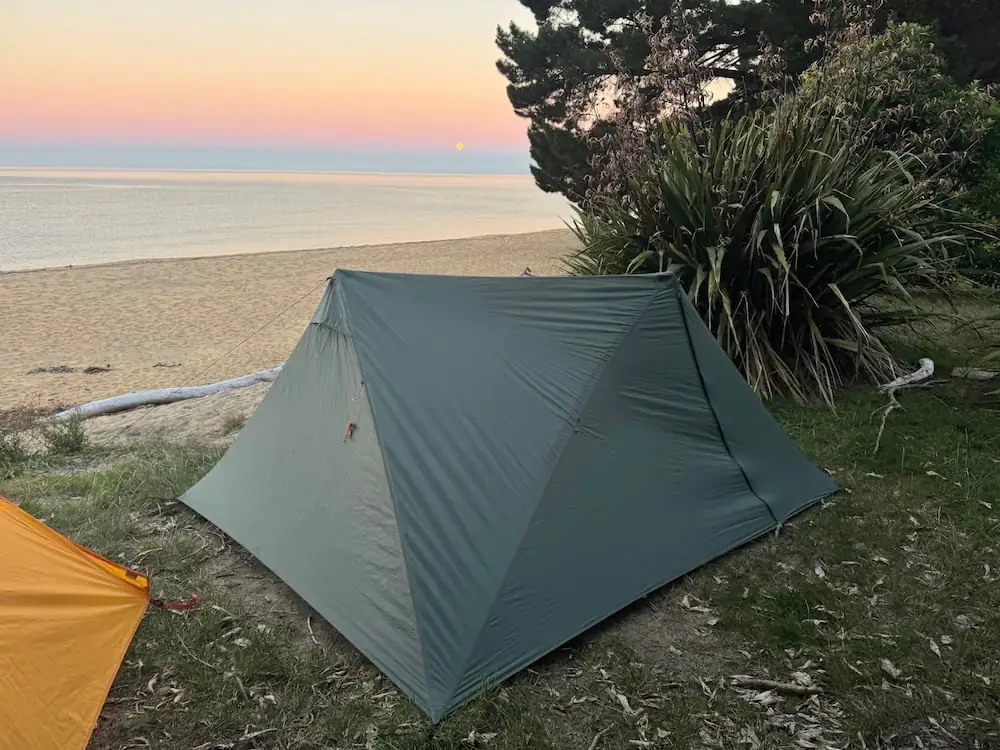
Do I need a tent?
Sometimes while backpacking (or tramping as they say) in New Zealand, you'll want to carry a tent as a backup shelter in case huts are full. However, for the Great Walks, you'll reserve your spot in huts if you're walking during the Great Walks season.
So if you only plan to stay in huts on the Great Walks, you don't need a tent. However, it can be nice to have a tent on hand for your travels if:
- All the Great Walk huts are booked but some campsites have availability
- You might do some other multi-day hikes where bookings aren't required
- You're doing a lot of road tripping and want the option to do some car camping during your visit to New Zealand
Originally I wasn't planning on getting a tent for New Zealand. I had a lot of gear to buy after all.
But after doing more research, I realized it would be good for me to get a tent. I'm so happy I did because I've since used it on two Great Walks, including one where staying in a tent made it easier to hear the kiwi birds calling at night!!
Note that if you do bring a tent, you'll need to make sure it's thoroughly clean before entering the country. You'll need to declare it, and New Zealand's border control will check it out.
Shop Tents
Here are a few few tents to consider:
➡️ Durston X-Mid 2 – This is one of the most affordable lightweight tents out there. It's the tent I use, and I've been loving it!
➡️ Big Agnes Copper Spur UL2 – This is a popular and highly rated tent.
➡️ MSR Hubba Hubba LT 2 – This is another popular and trustworthy tent.
What kind of sleeping bag should I bring?
Whether you plan to stay in huts or camp, you will need to bring either a sleeping bag or a quilt.
Originally I was very keen to get a sleeping bag, but after doing heaps of research, I eventually settled on a sleeping quilt instead. Why? Well, sleeping quilts:
- Take up less space in your pack
- Don't necessarily sacrifice warmth like you'd think they might
- Can be a bit more versatile in that you can use some more like a blanket on top of you or like a sleeping bag, which is helpful when facing a variety of temperatures
Tip: They say you should get a quilt that's about 10°F lower than any temperatures you expect to encounter. So if you plan to experience temperatures as low as 30°F (-1°C), a 20°F (-7°C) quilt is a good choice.
I got the El Coyote AlphaLite 20°F (-7°C) 900+ fill power goose down quilt as I figured that would work well for me in both huts and camping. It can be a bit warm at times for the huts, but I only wanted to get one quilt for now since they can be pricey.
I like supporting small companies like El Coyote when I can, and I appreciate that they offer so many options to customize the size and color of the quilt.
In huts I also bring along a sleeping bag liner with my quilt. That way I don't have to lie directly on the mattress.
Shop Sleeping Bags and Quilts
Here are a few I recommend checking out:
➡️ El Coyote AlphaLite Quilt – This is what I use.
➡️ Katabatic Flex 22 Quilt – This seems to be one of the best quilts out there. I would have ordered this one had they not been sold out of the color I wanted at the time.
➡️ REI Co-Op Magma 15 Sleeping Bag – This is a good option that's a bit more affordable.
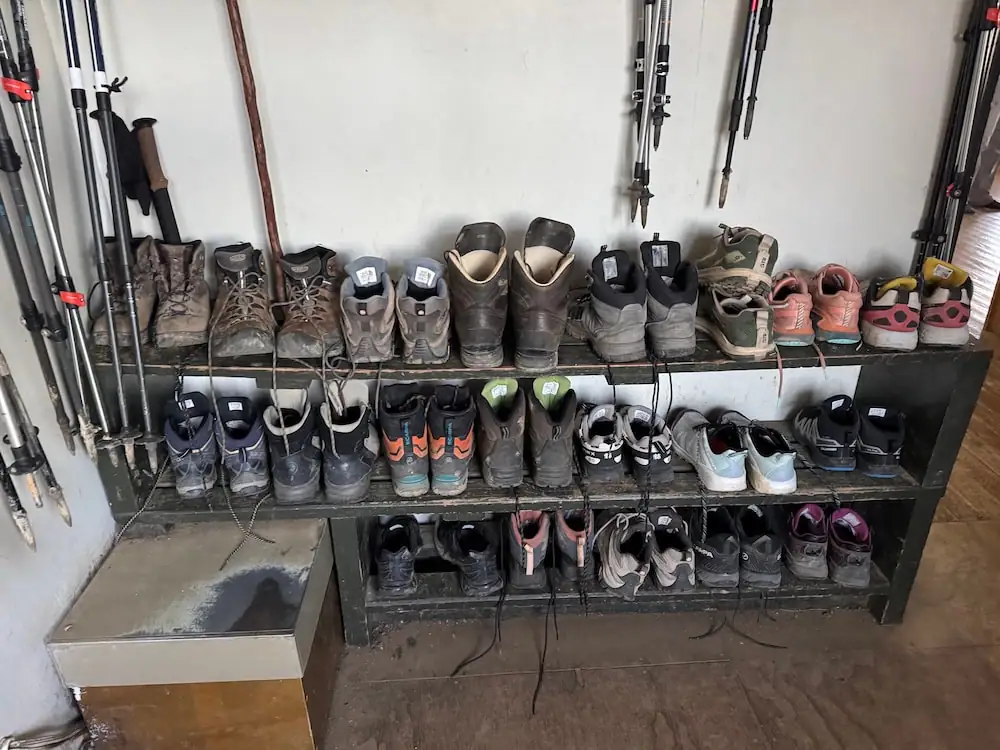
How do I find the right shoes?
Most people do the Great Walks in either hiking boots or trail running shoes.
Personally, I usually opt for hiking boots when encountering more rugged terrain and elevation change like on the Routeburn Track for instance. Whereas on more mellow trails like the Heaphy Track or Abel Tasman Coast Track, I'll wear trail running shoes.
Like backpacks, shoes are a very personal decision, so I recommend trying a number of options and deciding which feel best for you.
My Go-To Trail Running Shoes
For years now, I've trusted Hoka shoes to take care of my feet while marathon running, walking across Spain for a month, and completing a number of New Zealand's Great Walks. Personally, I like the Speedgoats and Challengers when it comes to hiking, but they have a number of different trail shoes available.
➡️ Check Out Hoka's Trail Running Shoes Here
My Go-To Hiking Boots
When I need a little extra support, I choose to wear hiking boots instead of trail shoes. I recently got this pair of Merrell boots after doing extensive research. They've served me well now hiking in the Rocky Mountains in the U.S. and navigating challenging terrain all over New Zealand.
➡️ Check Out Merrell Moab Hiking Boots Here
Do I need hiking poles for New Zealand's Great Walks?
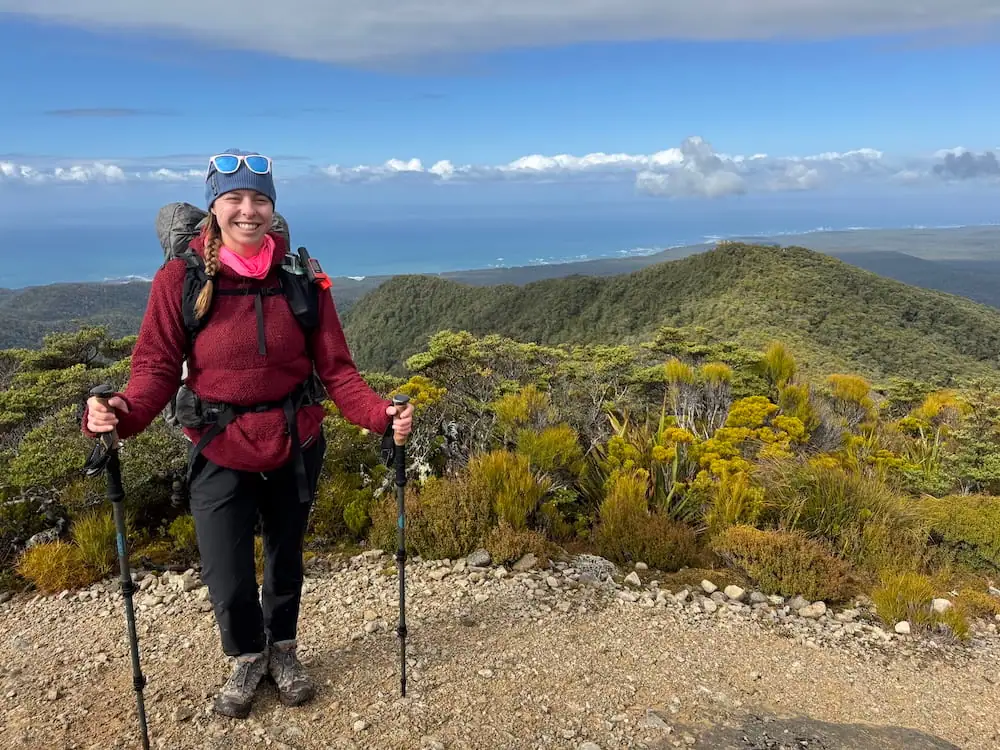
While you don't technically need hiking poles, I highly recommend using them. When you're hiking for hours over the course of multiple days and navigating elevation changes, you'll be thankful to have poles to take some of the pressure off.
Not to mention, if you encounter any rain and mud, having poles will be such a huge help. If it wasn't for my poles, I would have completely fallen into the mud on the Rakiura Track…Those poles saved me from that more than once!
The good news? You really don't need to spend much on hiking poles! My go-to pair costs about $65USD as I write this.
Buy Hiking Poles for Less Than $100
These hiking poles have helped me summit 14ers in the Rocky Mountains, walk across Spain for over a month, and complete seven Great Walks in New Zealand so far.
➡️ Check Out My Hiking Poles

Can I buy gear in New Zealand?
Don't worry, if you forget something, you can absolutely buy it in New Zealand! With such a strong culture of enjoying the outdoors here, there are numerous outdoor stores all over the country.
The only thing with buying gear here is that you can expect to likely pay a bit more than you would at home, especially for things like tents, backpacks, etc. I've found clothing prices to be fairly reasonable here, but everything else tends to be marked up quite a bit since New Zealand is so remote compared to the rest of the world.
For outdoor gear, you can check out some of these chain stores (as well as any smaller local outdoor shops):
- Macpac
- Kathmandu
- Bivouac Outdoor
- Outside Sports
- Mountain Warehouse
You might also check out any secondhand stores, called “op shops” in New Zealand. If you're in a particularly outdoorsy area, you might be able to find some great gear.
For reference, I was able to get my ski gear mostly from secondhand stores in a small ski town for under $400NZD (that's less than $200USD)!
Packing Differences Between Great Walks
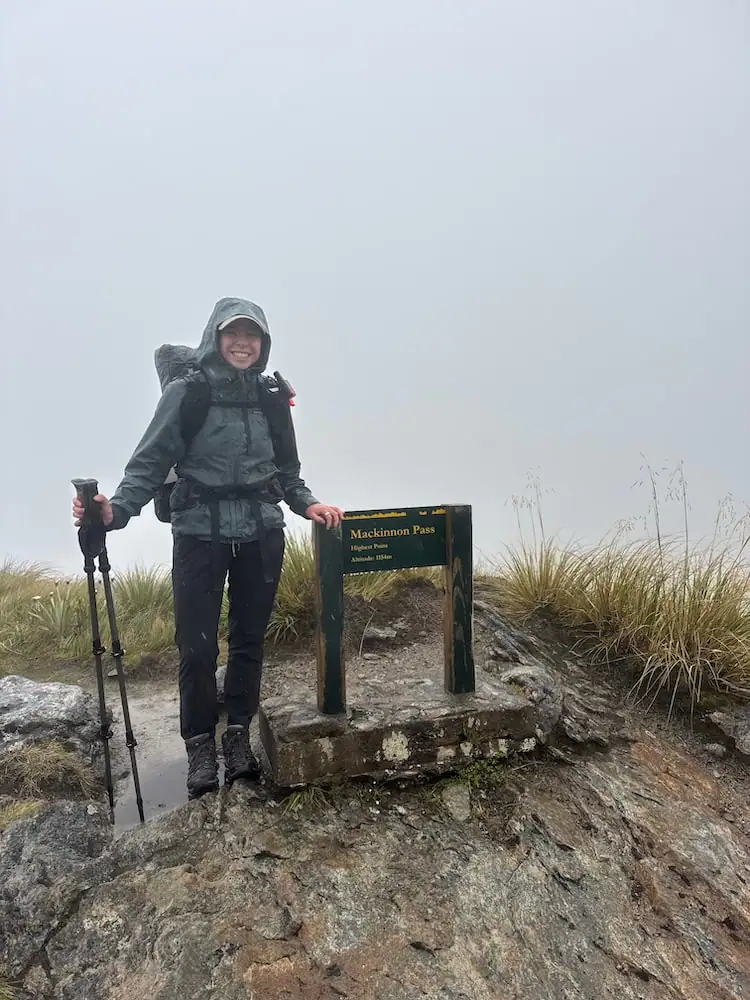
While the basics of your packing list will stay pretty similar across New Zealand’s Great Walks, each track comes with its own quirks, whether that’s relentless rain, alpine weather, mud, beaches, or sandflies.
Here are the biggest packing differences to know before you go.
| Track | What's Unique About Packing for This Track? |
|---|---|
| Milford | Rain gear is NON-NEGOTIABLE. Prioritize a quality rain jacket, rain pants, dry bags, extra socks, and quick-dry clothing. Expect mud and wet feet. Sandfly repellent is a must. It's a good idea to bring an extra change of dry clothes. |
| Routeburn | Expect more alpine exposure and elevation gain than some other Great Walks. Pack warm layers, gloves, a beanie, and solid rain protection even in summer. Weather can change fast around Harris Saddle. Hiking poles are especially helpful here for descents. |
| Kepler | Expect similar challenges to Routeburn with exposed ridge walking, especially on the Luxmore section. Bring windproof layers and warm clothing even if the forecast looks nice. |
| Hump Ridge | Pack for a mix of coast, forest, alpine sections, and serious weather exposure. Rain gear, warm layers, gloves, and a beanie matter here, even in warmer months. No need to bring a pillow, pot, stove, or utensils–those are all supplied. Because it’s a tougher, longer track with big climbs, keeping your pack weight low is especially important. |
| Rakiura | Expect mud, lots of mud. Consider bringing gaitors and an extra change of clothes. Sandflies can also be relentless. Bring patience and embrace getting dirty. |
| Abel Tasman Coast | With so many lovely beaches, you'll want to bring swimwear, sandals, and more sun protection than other tracks. You can often get away with fewer heavy layers, but still bring rain gear because… New Zealand. |
| Paparoa | Pack for wet West Coast weather, exposed alpine sections, and long mileage days. Prioritize strong rain gear, dry bags, warm layers, and shoes with good grip. Because it’s also a shared-use mountain biking track for much of the year, bright/visible clothing can be helpful too. |
| Heaphy | A weird mix of climates—forest, coast, and exposed areas. Expect mud, wet weather, and sandflies. Good rain gear and bug repellent help. |
| Tongariro Northern Circuit | This is the coldest-feeling Great Walk for many people because of volcanic/alpine exposure. Prioritize warm layers, gloves, beanie, and windproof gear. Sun protection matters too because UV exposure is intense at elevation. |
| Whanganui Journey | Since this is a canoe/kayak Great Walk, waterproof dry bags become much more important than on the hiking tracks. Quick-dry clothing is key. You might also consider wearing hiking sandals. |
| Lake Waikaremoana | This track feels more remote than some other Great Walks. Prioritize emergency preparedness, downloaded maps, and a good headlamp. Expect changing weather. |
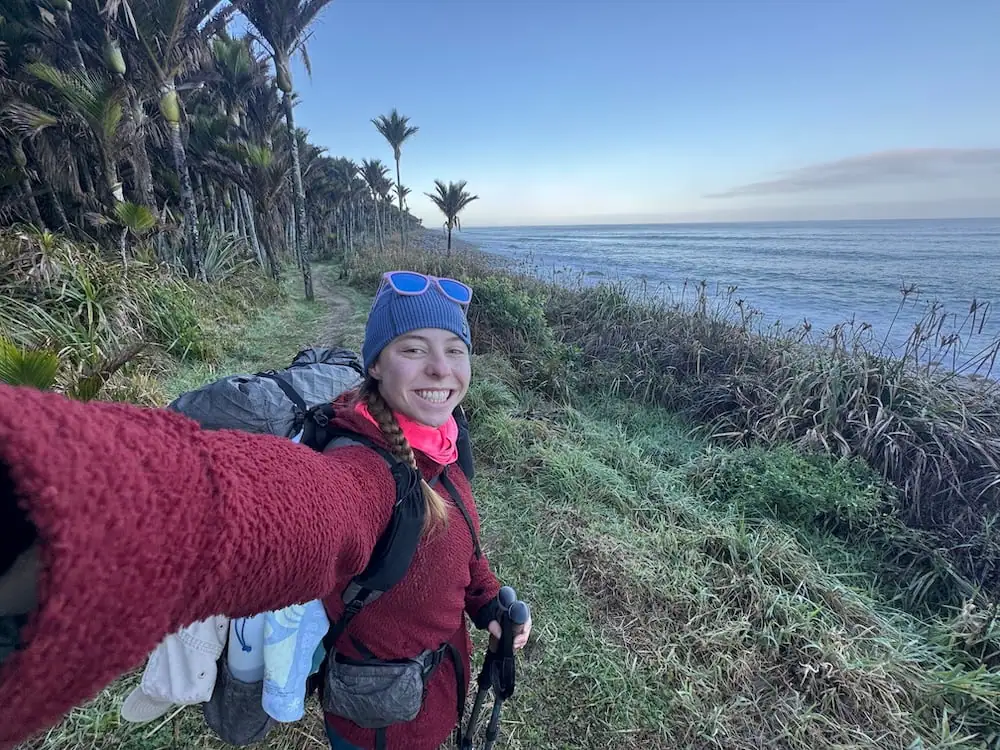
Everything You Need on Your Women's NZ Great Walks Packing List
Here's my comprehensive women's packing list for New Zealand's Great Walks, including links to the products I use and recommend.
Note that this packing list is for hiking during the main Great Walks season. Hiking outside of that season can require additional gear and expertise and isn't recommended for many tracks.
Backpack
- 45-60L hiking pack – I use the Durston Kakwa 55. The Osprey Eja 58 is another great option.
- Pack liner – This is essential for ensuring your gear stays dry.
Sleep and Camp
- Sleeping quilt
- Camping pillow
- Sleeping bag liner (for huts only)
- Sleeping pad (for camping only)
- Tent (for camping only)
Clothes and Shoes
- One short sleeved hiking shirt (worn) – Avoid cotton. Stick with wool or synthetics.
- One pair of hiking pants (worn)
- Sun hoodie (worn) – New Zealand has some of the strongest UV in the world, so you'll want to cover up your skin as much as you can.
- Long sleeved shirt
- Extra short sleeved shirt (optional–sometimes I'll wear this at night if I get hot in the hut; it can be nice to have an extra shirt on particularly rainy tracks too)
- Shorts (optional–sometimes I'll wear these at night if I get hot in the hut)
- Thermal top for sleeping
- Thermal bottoms for sleeping
- Fleece pullover
- Rain jacket
- Rain pants
- Down puffer jacket
- Hat (worn)
- Sunglasses (worn)
- Buff (worn)
- Two to three pairs of socks – Reserve one pair for sleeping only.
- Two to three pairs of underwear
- One sports bra (worn)
- Beanie
- Gloves
- Swimsuit and towel (optional–many Great Walks have opportunities for swimming)
- Trail running shoes or hiking boots
- Camp shoes – I use Crocs, but I also highly considered these lightweight Birkenstocks. You'll want something as you can't wear your hiking shoes in the huts.
Safety
- Satellite communication device or personal locator beacon – Having one of these is especially important if you are going solo. You can rent PLBs in New Zealand, but if you plan to do lots of solo hiking, I think it can be worth purchasing your own device. I use the Garmin inReach Mini.
- Headlamp – Make sure you also carry spare batteries or a power bank if you have a rechargeable one like mine.
- Safety kit – I fill mine with an emergency bivvy, backup water purification tablets, extra guyline (for camping only), gear repair patches, hand warmers, paper, pen, duct tape, and safety pins
- First aid kit – I like this kit but pared it down and put the items in a plastic bag to cut down on weight.
- Whistle
- Compass – If you're from the northern hemisphere, wait to buy a compass until you get to New Zealand since you'll want one that works in the southern hemisphere.
- Swiss Army knife
- Extra lighter
Toiletries and Medical Supplies
- Mini hairbrush with mirror
- Extra hair ties
- Toothbrush
- Toothpaste
- Chapstick
- Sunscreen
- Dr. Bronner's Castille Magic Soap Unscented – This is perfect for backpacking because it's highly concentrated, biodegradable, and versatile. I use it to wash my dishes and my hands.
- Hand sanitizer
- Bug spray – This is critical if you're going anywhere where you'll encounter sandflies (pretty much any hikes in Fiordland or the West Coast). Their bites can leave you with a burning itch that seems to last for aaaaages.
- Anti-itch cream – This is also helpful if you're going to encounter sandflies.
- Roll of toilet paper (optional–toilets on the Great Walks are usually well-supplied, but I think it's a good idea to have some backup TP on hand just to be safe)
- Trowel (optional–there are lots of toilets on the Great Walks)
- Any other needed medications or toiletries
Food, Drink, and Kitchen Items
- Breakfast for each morning on trail
- Lunch for each day on trail
- Dinner for each day on trail plus one extra
- Snacks
- Water filter – Some people drink the water from the huts without filtering, but you never know what the water quality will be like. In my opinion, when you're out on a once-in-a-lifetime hike in the remote wilderness is NOT the time to take your chances when it comes to clean water. I use the Grayl filter bottle but plan to switch to the lighter Sawyer Squeeze eventually.
- Water bottles – I like to carry two, one that I use for water and another that's collapsible that I can use with electrolyte mixes.
- Camping pot – This pot doesn't fit very well on many of the hut stoves, but I like how small and portable it is. I often just bring my own stove to solve this issue.
- Pot cozy (optional but this is nice to have for keeping food or drinks in your pot warmer for longer and for making it easier to move around a hot pot)
- Camp stove (optional in many Great Walk huts, but it can be nice to have)
- Fuel (optional in many Great Walk huts, but it can be nice to have)
- Small lighter
- Spork – I recommend a long-handled utensil like this because it makes it much easier to eat the dehydrated backpacking meals without your hand getting too messy.
- Lightweight mug (optional)
- Small microfiber towel
- Bag to hold kitchen supplies
Before I came to New Zealand, I had read about how rodents (and birds too) can be problematic when it comes to food on the Great Walks. Lots of folks recommended rodent-proof bags to store your food, but when I looked into those, they seemed quite expensive.
I instead opted to purchase a bear canister since I could use that back at home in North America. However, after taking it on one Great Walk, I realized the canister was so over the top and unnecessary. I didn't want to carry the extra weight and volume, so I quickly ditched it.
Now, instead I just carry my food in an odor proof ziploc bag and keep it sealed within my pack at all times when I don't need it. I haven't had any issues yet.
Miscellaneous
- Phone
- Smartwatch
- Hiking poles
- Kindle Paperwhite or other entertainment source
- Portable charger and charging cables- Not everyone brings one, but I think it's critical to have on hand so you can recharge your headlamp and any other safety devices. Plus, you want to have plenty of battery on your phone for pictures!
- Sit pad (optional–I use this more while camping; it's nice to have to keep you warmer and a bit comfier when spending long periods outside)
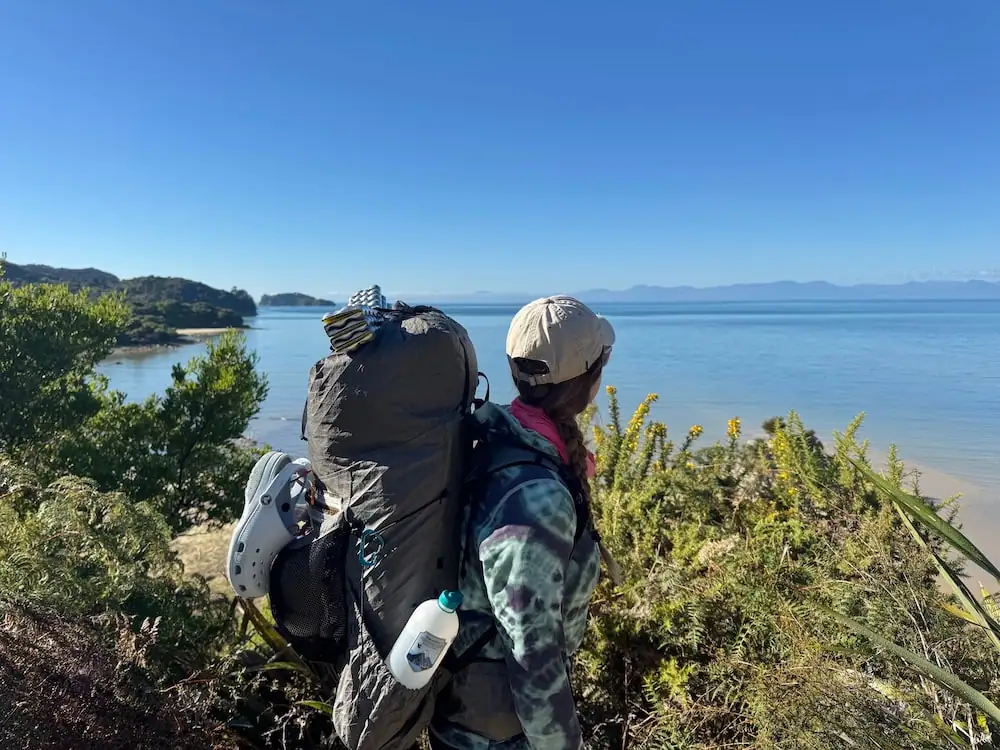
Download My Exact Great Walks Packing List
Want a summarized version of this list? Enter your name and email below for the one-page version of this list you can print out and check off as you put your gear together.
Sample One-Day Meal Plan for the Great Walks
Once you figure out your gear, trying to sort out your food for the track is a WHOLE other challenge. Here's what I usually eat in a day on the trail to give you some inspiration.
These are all things that you can find in supermarkets in New Zealand.
Breakfast
- Oatmeal packet, sometimes with fresh or dried fruit added
- Avalanche instant coffee
Lunch
- Two wheat tortillas filled with peanut butter – I like the Pic's peanut butter slugs because they're just little packets you squeeze on to the tortillas, making meal prep super easy.
- Cheese and crackers, sometimes with salami – There are loads of cheese and cracker packs at the store or you can DIY it yourself.
Snacks
- OSM bar
- Fruit
- Chips – Pringles are one of my favorites since the sleeve can fit in the side of my pack easily.
Dinner
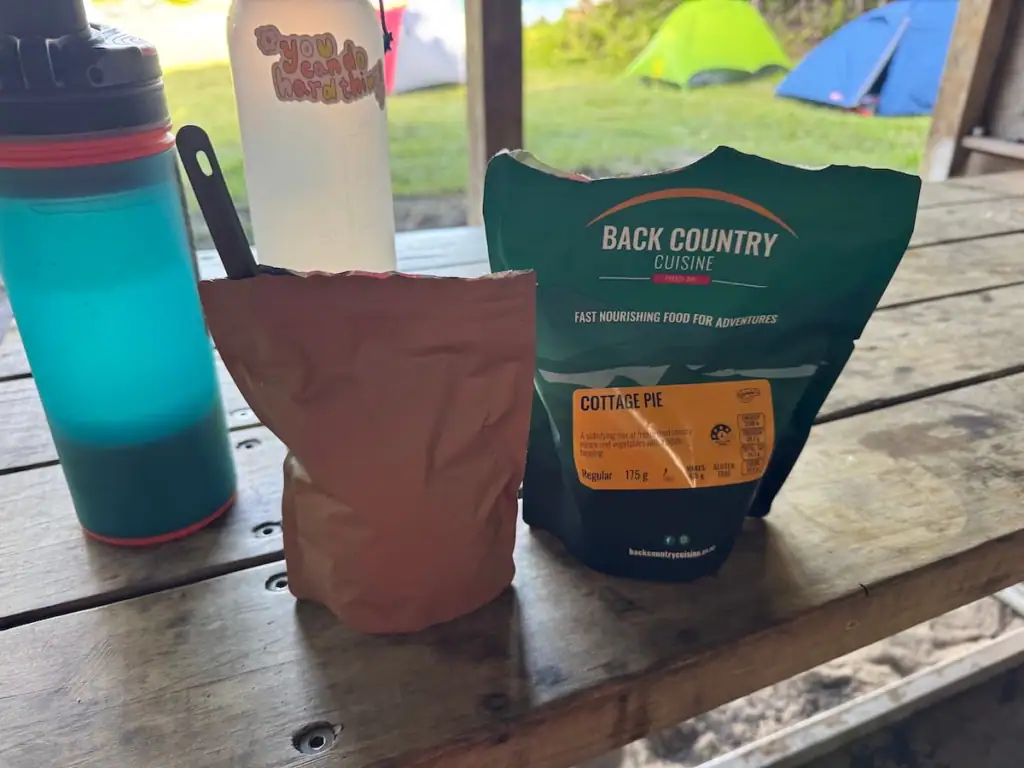
- Dehydrated backpacking meal – Some of my favorites are the Real Meals Mexi Nachos, Back Country Cuisine Cottage Pie, and Back Country Cuisine Tasty Chicken Mash.
- Hot chocolate or tea
- Whittaker's chocolate – You have to try this chocolate while in New Zealand! For backpacking, I like the mini ones that are individually wrapped.
I recommend waiting to buy any of your backpacking food until you're in New Zealand. Not only will it make packing to get over here easier, but then you won't have to worry about customs possibly taking any of your food.
Budgeting Tips for Buying Gear
If you don't own much gear already, then it can quickly add up. Here are a few tips to help keep your spending to reasonable levels:
- Watch out for sales. REI often has big sales around the end of May, end of August, and in November.
- Buy most of your gear in your home country, or at least the most expensive items. Purchasing gear, especially pricier items like tents, is often more expensive in New Zealand.
- Know that you don't have to buy the most expensive ultralight items available. You can still keep your pack to a fairly reasonable weight without paying for the absolute most ultralight gear out there.
- Shop secondhand. You might be able to get some good deals on used gear. Check at home first, but if you have time and flexibility, you might also look in some shops when you get to New Zealand.
How to Pack Your Backpack Properly
Once you have all your gear, know that there is an art to packing it all up in your backpack. Pack it wrong and your back may hate you for hours later… Pack it right and you'll forget just how much you're carrying!
Here are some tips for packing that have worked well for me:
- Skip the stuff sacks (at least as much as possible). I like staying organized, but they can add extra weight and also make packing a bit awkward.
- Pack your sleeping bag or quilt first. Use it for some extra cushion between your pack and everything else.
- First add in items that you won't need while walking. This includes things like your sleeping bag liner or sleeping pad, toiletries, extra safety items, electronics, and camp kitchen items.
- Next add in bulky heavy items. For me this usually means my big food bag. I want it to be close enough to the top that it's accessible but also shoved far enough down in my pack that it's close to my core since it's one of the heaviest items I'm carrying.
- Lastly, add in any extra layers you might need during the day. For me, this is usually my fleece pullover and puffy jacket (I tend to keep my rain gear on the outside of my pack for ease of access). If I'm camping, I typically put my tent on top of all of this too.
- Keep anything you'll often need in outer pockets. This includes your water bottle and filter, trowel, hand sanitizer, phone, any snacks for the day, etc.
Packing is very individual and depends on your specific gear, so try packing up a few different ways and see what feels best to you.
Frequently Asked Questions
Here are some answers to frequently asked questions when it comes to putting together your gear list for the Great Walks.
What to bring on a Great Walk?
While New Zealand's Great Walks have huts you can stay in, they aren't fully serviced huts with restaurants and all your gear included like you can find in some other countries. You need to bring all your own food, kitchen supplies, and a sleeping bag or quilt.
What size backpack do I need for NZ Great Walks?
Around a 45-60L backpack is perfect for the Great Walks in New Zealand. You want something that's big enough to fit all your gear–including a sleeping bag or quilt–without having too much extra room that might tempt you to carry too much.
Are hiking boots necessary for New Zealand Great Walks?
Whether you wear hiking boots on the New Zealand Great Walks or something else is a personal preference. Many people walk all Great Walks in trail running shoes. However, for more rugged routes, especially if you anticipate rain, I think it can be a good idea to wear boots for the extra stability.
Do I need waterproof shoes for NZ Great Walks?
You do not need waterproof shoes for the NZ Great Walks. While I like wearing waterproof boots myself, I find they still seem to get wet anyways (that's New Zealand for ya!). Non-waterproof shoes often dry out more quickly.
Can beginners do New Zealand's Great Walks?
New Zealand's Great Walks can be a good option for beginner backpackers since the trails are clearly marked and well taken care of, other hikers will be around, and the Department of Conservation will be monitoring weather and trail conditions. That said, I recommend doing proper research on the track and completing at least several day hikes beforehand.
Personally, I had never done a true backpacking trip before starting the Great Walks, but O had extensive day hiking experience.
Download My Women's Packing List for New Zealand's Great Walks
Now that you know what to expect when it comes to packing for these multi-day hikes, take a moment to download my NZ Great Walks packing list so you can get started sorting through your gear and figuring out what you still need to buy:
Read More About New Zealand Travel Essentials
- 40 Must-Know New Zealand Travel Tips for a Smooth Trip
- Driving in New Zealand: Tips from a Once-Nervous American
Read More About the Great Walks
- NZ Great Walks Packing List for Women (What I Pack)
- Routeburn Track in 2 Days From Te Anau: My Solo Hiking Guide
- Kepler Track in 3 Days: My Solo Great Walk Itinerary
- Te Anau Accommodation: Hotels, Hostels & Camping
- Rakiura Track Guide: 3 Days Camping on Stewart Island Solo
- Stewart Island Accommodation: Where to Stay for Every Budget
- 8 Best Things to Do on Stewart Island I Actually Loved
Read More About South Island Travel
- 11 Things to Do in Te Anau: More Than Just a Milford Gateway
- Doubtful Sound Overnight Cruise Review
- Te Anau Accommodation: Hotels, Hostels & Camping
- Fox Glacier Heli Hike Review: Is it Worth It in 2026?
- Roy’s Peak Sunrise: A Bucket List Hike Worth Waking Up For
- 8 Best Things to Do on Stewart Island I Actually Loved
- Stewart Island Kiwi Tour Review: Is it Worth it?
- How to Get to Stewart Island: I Tried the Flight & Ferry
- Stewart Island Accommodation: Where to Stay for Every Budget
