
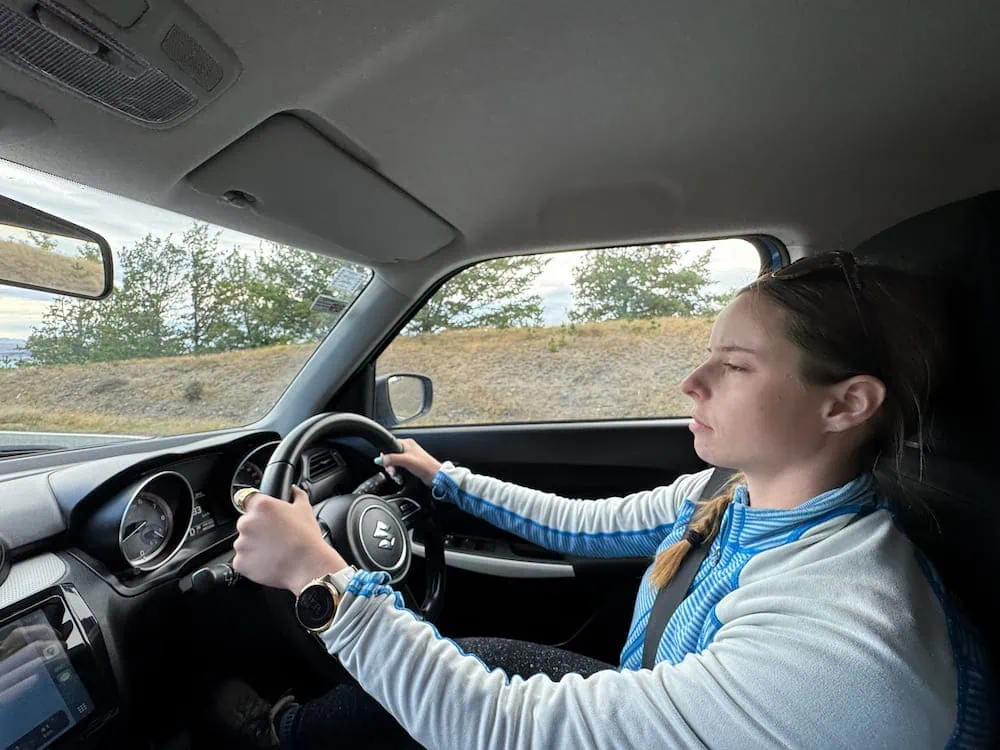
Driving in New Zealand: Tips from a Once-Nervous American


If you're anything like me, you're feeling SO excited for your first trip to New Zealand but are absolutely dreading one thing: driving on the left.
I get it. I hate driving in general and usually avoid renting a car at all costs while traveling abroad. So the thought of renting a car AND driving on the opposite side of the road was filling me with allll kinds of feelings (and they weren't good).
The good news? Driving in New Zealand isn't hard as you might think. In fact, I actually prefer it much more to driving in the U.S.!
I still remember my first drive in New Zealand–I felt pretty nervous the entire time. But surprisingly, I quickly realized driving on the left wasn't the hardest part. For me, the bigger adjustment was getting used to New Zealand's narrow, winding roads.
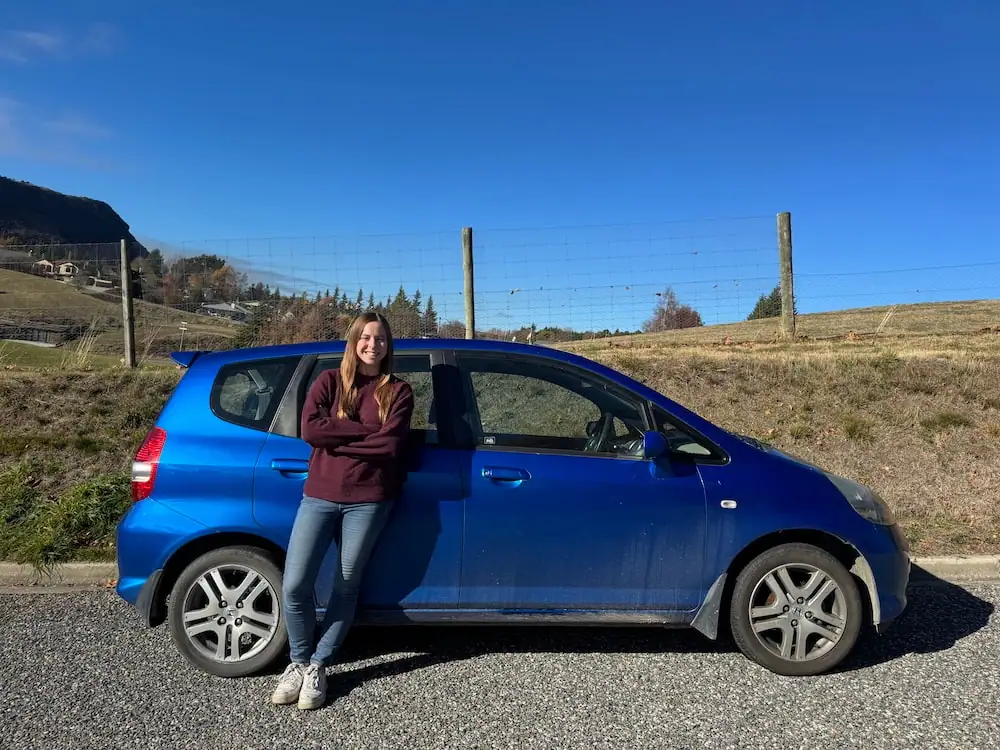
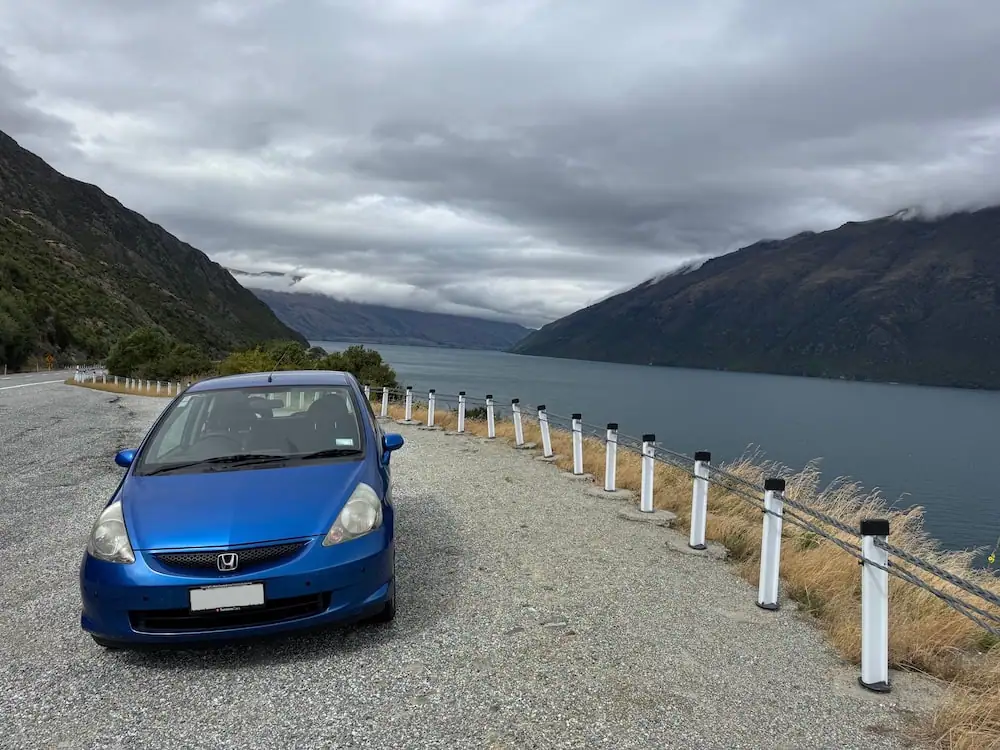
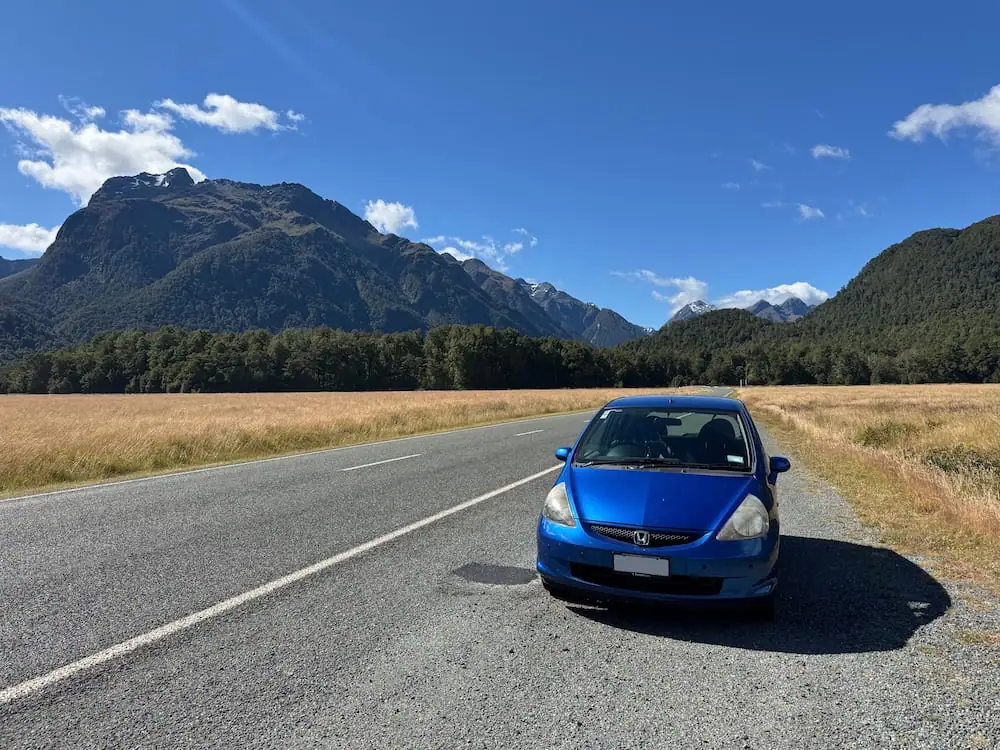
I've since moved to New Zealand for a year, bought a dinky little 2007 Honda Jazz, and have driven thousands of kilometers all over the South Island. I've had all kinds of driving experiences here, from easy roads in the Canterbury Plains to winding mountain passes, gravel roads, and some of the hardest drives in the country.
Here's a look at some of the routes I've personally driven so far:
If you’re feeling anxious about driving in New Zealand–especially if it's your first time driving on the left–I promise you’re not alone. In this guide, I’ll walk you through what to expect, practical tips for first-timers, and the things I wish I’d known before getting behind the wheel here.
Is Driving in New Zealand Difficult?
Driving in New Zealand can take some getting used to, but it's not overly difficult. The good news is if you're coming from somewhere like the U.S., Canada, or a country in Europe, the traffic laws are very similar.
Many people find driving on the left is easier than they expect. What they typically find harder are the more winding, narrow roads that are often one lane in each direction.
Given these kinds of roads, one of the biggest adjustments for me was realizing that driving in New Zealand can take a lot more mental energy compared to driving on a U.S. interstate highway.
Just drive extra carefully, pay close attention to road signs, and you should be fine. Most confident drivers adjust quickly and soon learn to love driving in this beautiful country.

What You Need to Know Before Driving in New Zealand
Here are the key things you need to know before you get behind the wheel in New Zealand.
You Drive on the Left Side of the Road
Of course, you already know this. BUT you may not have thought about how this also means that:
- The steering wheel is on the right side.
- The blinker and windshield wiper controls may be flipped from what you're used to.
- You'll need to go left in roundabouts.
It didn't take me too long to adjust to driving on the left. I just kept telling myself over and over to keep left and to yield when turning right.
Once I got used to that, the hardest thing for me was just backing up. I kept wanting to reach for the gear shift with my right hand only to find nothing there… And something about twisting my body to the left to look back felt so wrong.
Don't stress! You've got this. If it helps, maybe even consider writing a post it note reminder for yourself for the car that says “Keep left!”

New Zealand Roads are Very Different Than What You Might Expect
If you're coming from the U.S. like me, you'll likely find the roads to be much more narrow and winding than what you're used to. They're definitely not the same as the straight, fast, multi-lane, divided interstate highways in the U.S.
Just take a look at the directions below for part of the drive between Queenstown and Wānaka along the Crown Range Road. This road takes you through the mountains and has a lot of curves and steep, narrow sections.
I was definitely VERY nervous the first time I drove this road… (but now I'm use to it and love it!)
Roads in New Zealand often have just one lane in each direction, even on the 100 km per hour (that's 62 mph!) roads. That felt a little unnerving to me at first being so close to oncoming traffic at such a high speed.
Plus, even if you're on a 100 km per hour road, know that you'll likely pass through a number of towns on the way, having to slow down each time. It's also not uncommon to have to slow down, or even stop for a few minutes, for construction.
After a few days of driving in New Zealand, I found that I really enjoyed driving here. It took some getting used to at first, but now I find the drives more exciting than those at home in the U.S. It helps too that there often isn't nearly as much traffic to have to worry about.
Give Yourself a Day or Two to Recover From Jet Lag First
You'll undoubtedly find yourself feeling exhausted after lengthy travels to reach New Zealand. I know you probably have a lot you want to squeeze in, but resist the urge to start driving immediately.
Drowsiness can impair your driving just like drinking can. That's bad enough for a regular driving route that you're used to, but makes driving in a different country and on the opposite side of the road that much more of a bad idea.
Spend at least one or two nights in your first destination. Here you can catch up on sleep and get energized before starting the more active parts of your trip.
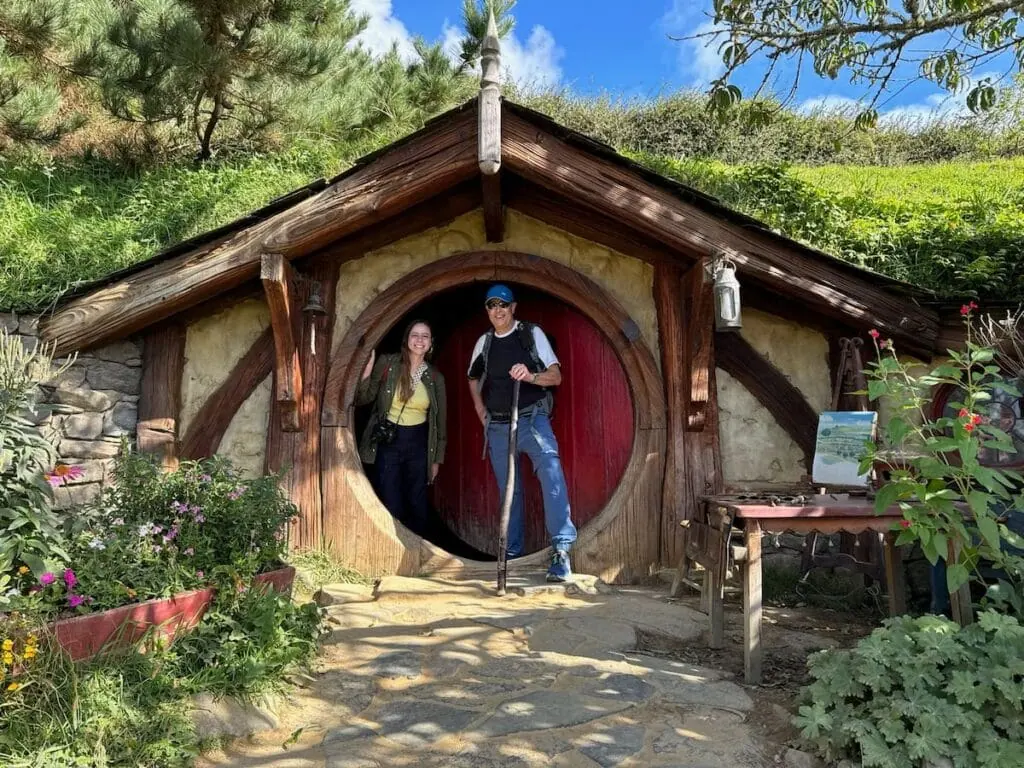
If you first arrive in Auckland, this is a good excuse to take day trip to Hobbiton (with transportation included) so you can still do something fun without driving. That's what my dad and I did during our first visit so we could catch up on sleep for a few days before starting our road trip.
Double Check That You Can Drive on Your License from Home
You can legally drive in New Zealand with your license from home for up to 18 months if it's in English. If it's not in English, you'll need to get an international driving permit with the English translation.
I recommend double checking all driving requirements with NZTA before your visit just to be safe.
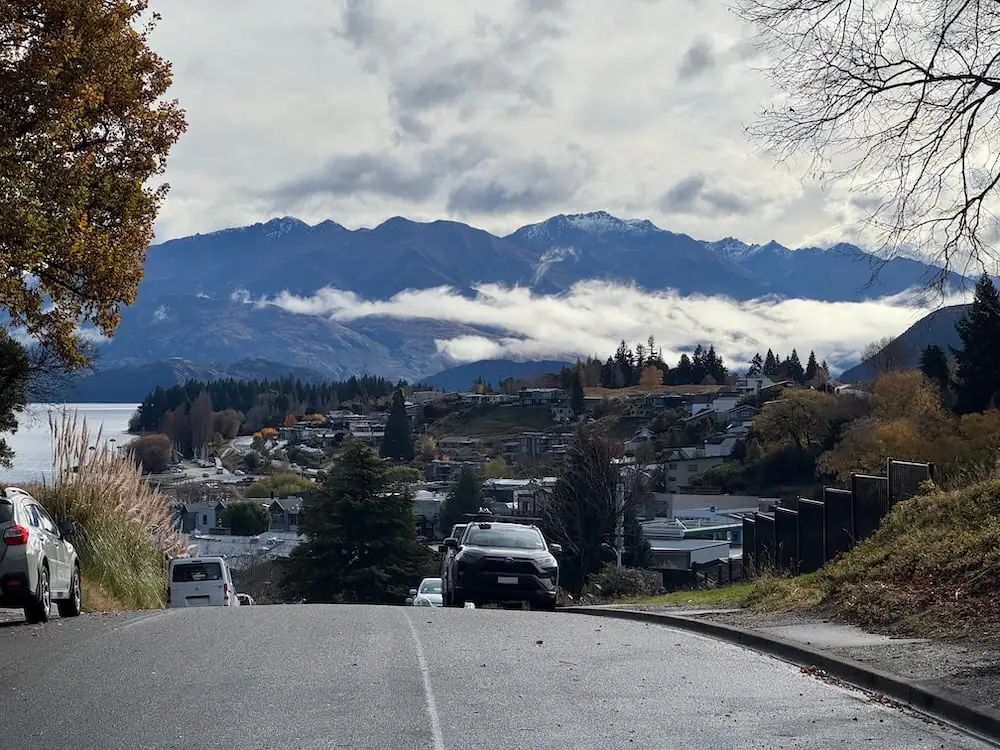
25 Tips for Driving in New Zealand for the First Time
Here are my top tips to keep in mind before you try to drive in New Zealand for the first time.
1. Choose Your First Drives Carefully
I highly recommend trying to make your first drive a bit easier for yourself by choosing the right route. That means avoiding the chaos of Auckland or super winding mountain roads like the Crown Range Road in the map above.
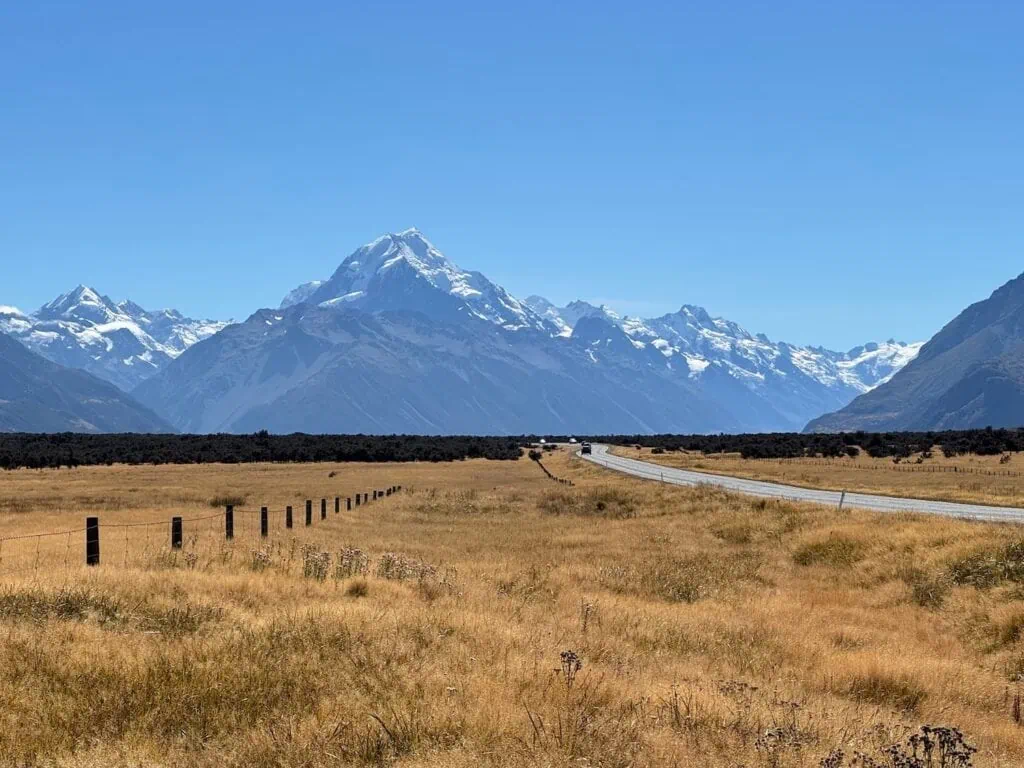
Instead, I'd try to choose something with a bit less traffic and easier roads like the east coast of the South Island or from Christchurch to Lake Tekapo or Mount Cook, for example.
When I first arrived in New Zealand for my year here, I drove from Christchurch south down the east coast for a few days. Those drives are a bit straighter and easier than some of the others you can find around the country, and I found they really helped me build up my confidence before I tackled the more challenging roads.

2. Don't Learn Left-Side Driving and Campervan Driving at the Same Time
Many travelers to New Zealand are keen to rent a campervan to travel around the island. However, if you've never driven on the left-side (and never driven in New Zealand), I recommend spending at least a few days driving a regular car first. That way you can get used to the roads here a bit more before you pick up a campervan that will come with additional driving challenges.
This might be a bit of a hot take, but I find driving a campervan in New Zealand a bit overrated anyways, so don't worry if you think it might be too much for you.
Of course a campervan does have some perks when it comes to flexibility and being able to camp in some cool locations. But renting one can sometimes be even more expensive (and less comfortable) than staying in proper accommodations.
3. Don't Drive at Night
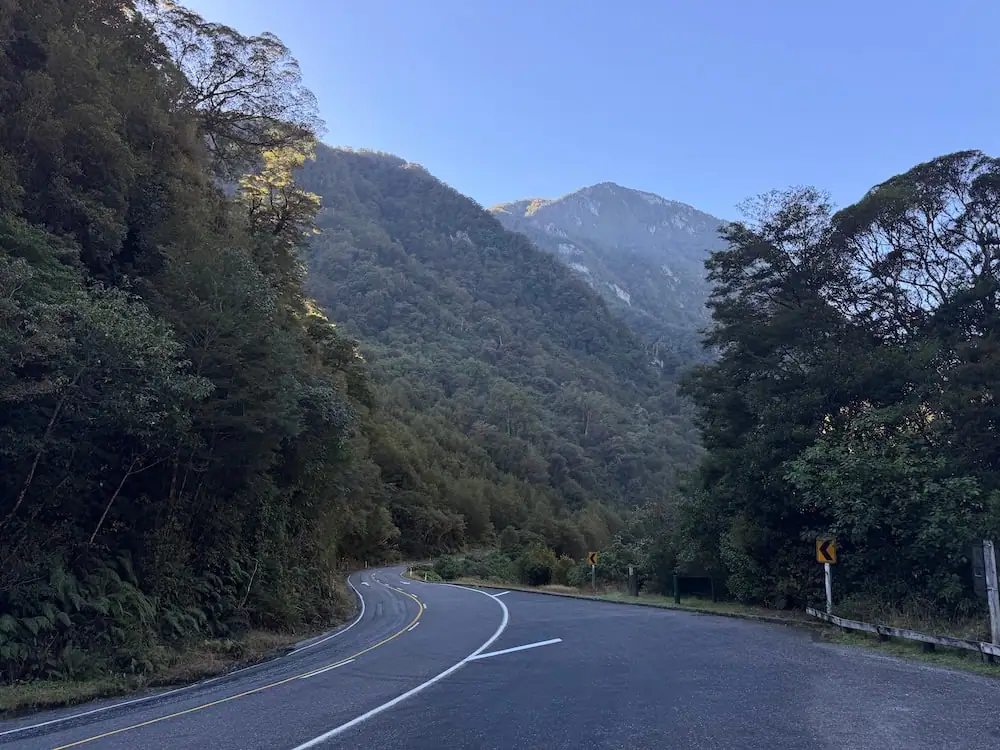
There are few streetlights outside of town and city centers, so expect any night driving to be quite dark. Add this lower visibility to winding roads in a place you've never been before and you've got yourself quite the challenging drive.
I write this article after having driven in New Zealand now for almost five months and I still avoid night driving except around town. Whenever I have longer drives on a road trip, I intentionally plan my drives around the sunrise and sunset times so I don't have to drive in the dark.
Even though I've been here a while now, I still don't feel fully comfortable driving the winding roads here in the dark.
If you do have to drive at night, take a careful look at your route before you go. If it looks particularly winding, you might see if there's an alternate route that would be an easier drive.
And if you drive at night, don't swerve for possums. It might sound cruel, but they're an invasive species in New Zealand that has contributed to the decline of native wildlife like the kiwi bird.
4. Stick to the Speed Limit
In New Zealand it's even more important to stick to the posted speed limits. With the narrow winding roads, doing so will help you stay safer. You might even find yourself at times wanting to go below the speed limit.
I'll never forget driving one of the most narrow winding roads I've seen–the more inland road on the Otago Peninsula–and seeing a “safe speed zone” with a speed limit of 60 km per hour. I have no idea how people could safely drive that road at that speed…
Aside from this, I've found police in New Zealand take speed limits more seriously than they do in some other countries. In New Zealand, the speed limit is treated as a true limit.
At least where I'm from in the U.S., it's quite normal for most people to go a bit over the speed limit, but in New Zealand, I've heard of people getting tickets for going less than 10 km per hour (that's less than 6 mph) over.
My dad actually got pulled over and let off with a warning when he was going 109 km per hour in a 100 km per hour zone.
There are speed cameras set up around New Zealand too, and you can get a ticket for going only 1 km hour the limit.
5. Pull Over if Traffic Builds Up Behind You
I think this is one of the most important tips in this list that's likely different than what you're used to at home.
Since most roads are just two lanes with one in each direction, it can be difficult for cars to pass. Sometimes you'll find passing lanes, where you can stay to the left and allow other cars to go by, but they aren't along many stretches of road, especially if you're not near a larger city.
That's why it's so important to pull over if you see traffic building up behind you. Of course you'll want to do safely whenever you see an appropriate place to stop with enough time to slow down beforehand.
Not only is this a common courtesy to the drivers behind you, but this will make the drive a lot safer and less stressful for you too.
Personally, I usually pull over anytime I have a car behind me, even if it's just one. I'd rather drive without the pressure and make sure people can get by if they want to.
6. Don't Overestimate How Much You Can Drive in a Day
Driving the curvy narrow roads in New Zealand is much more mentally taxing than the straightforward interstate highways of the U.S.
Because of that, I recommend keeping your driving distances shorter, no more than 4 hours or so. For your very first drive, you may want to keep it even shorter.
I also recommend taking lots breaks along the way so you can get out, stretch, and take a mental pause from the drive. There are so many lovely places to stop along drives in New Zealand anyways, so it shouldn't be too hard to find some cool stops during your journey.
I've followed this rule myself for most of my time here in New Zealand so far, and it's worked well for me. The longest I've gone now was seven hours, but those were generally straighter roads and that was only after I had been driving here for over five months. That said, even for me then, it was still a really tiring drive and not one I'm keen to do again!
7. Know That Your Drive May Take Longer Than You Think
Google Maps drive time estimates are not always quite right, so it's a good idea to allow extra time for travel. This is especially true if you have to drive more curvy roads, gravel roads, or through any construction areas.
For the most part, I've found Google Maps estimates to be pretty close, but it can really depend on the drive. For instance, the first time I drove to Raspberry Creek car park for the Rob Roy Glacier hike, it took me at least 30 minutes longer than Google estimated. The gravel road was pretty rough for my little dinky car to handle at the time, so I had to go pretty slow.
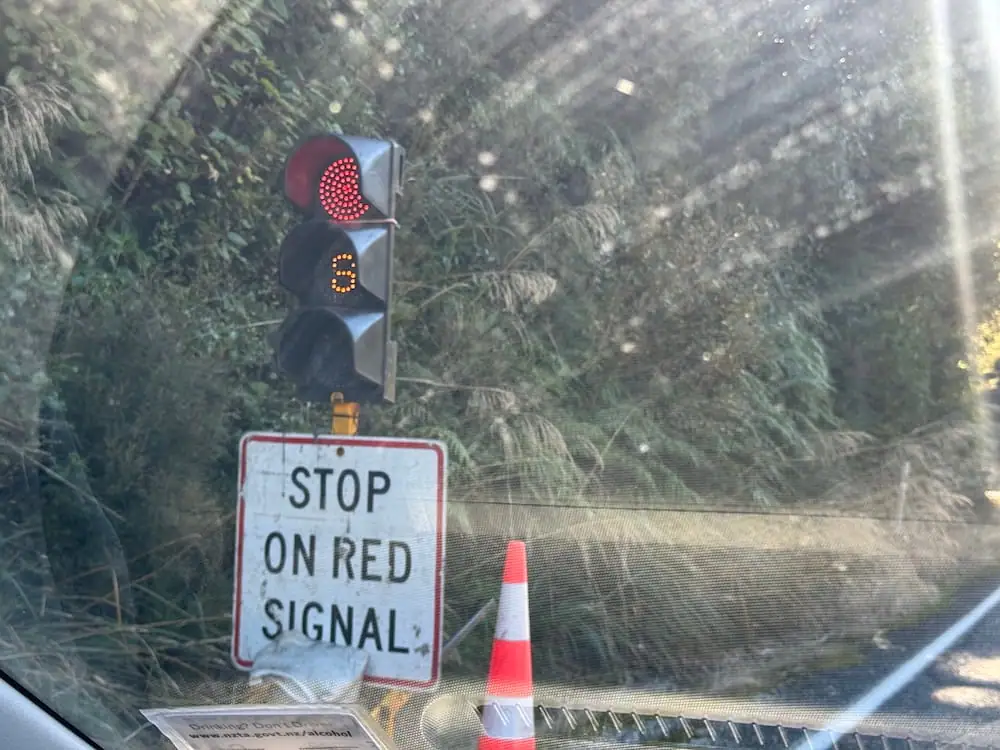
I've also gotten caught up in roadworks a few times where I've had to stop for sometimes as long as 10 minutes before continuing on.

8. Check Road Conditions Before You Drive
It's a good idea to double check your driving route before you hit the road. This is especially true in winter months but also important year round as roads can also have closures or delays due to landslides (called slips here), particularly after heavy rains.
Some of New Zealand's roads are so rugged that they seem particularly prone to this. Every time I've driven Milford Road and the West Coast, I've seen quite a bit of road repair work going on.
In wintertime, you want to be especially careful in mountainous and high elevation areas on the South Island. In late May before the start of winter, I drove the Crown Range Road linking Wānaka and Queenstown and encountered a bit of frost on one side of it! At times in winter on that road, you need snow chains. Sometimes they'll close it too if it gets too bad.
The NZ Transport Agency has a Journey Planner tool you can use to check road conditions before you go. They also have a number of regional Facebook pages you might check out for updates.
9. Learn How One-Lane Bridges Work
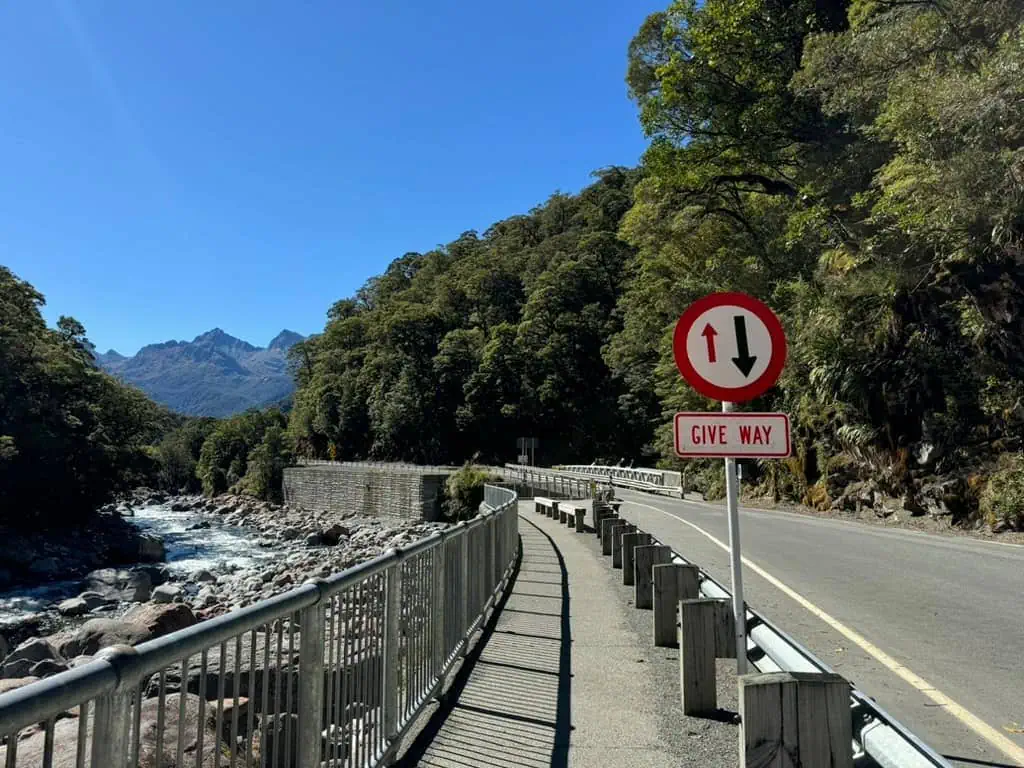
While most road signs in New Zealand are the same as in the U.S. and many other countries, you'll likely encounter one you haven't seen before: the one-lane bridge sign.
These signs will have two arrows. One arrow is big and black while the other is small and red.
If the arrow that points in your direction of travel is small and red, you must yield to anyone on the other side of the bridge. If your arrow is big and black, you have the priority, but you should still slow down and be aware of any other vehicles that may have already started crossing.
I don't know about you, but for me the thought of navigating a one-lane bridge sounded terrifying… But now that I've done them dozens, if not hundreds, of times, I've realized they're not bad at all.
There usually isn't much traffic in areas where they have one-lane bridges. Slow down enough so you can stop if needed, but you may not see any other cars.

10. Understand Roundabouts Before You Go
Since you drive on the left in New Zealand, you will also enter roundabouts by going left first. This means you'll yield to anyone coming from the right and you'll drive in a clockwise direction.
You'll want to yield to all traffic on the right, even cars in a different lane than the one you plan to enter.
Personally, I anticipated this direction change going into my first roundabout. But what quickly surprised me was the signaling used as well.
At least where I'm from in the U.S., no one signals in roundabouts and they're pretty rare.
But parts of New Zealand LOVE roundabouts. So you'll want to make sure you learn the correct signaling before you drive your first one:
- If you're taking the first left exit, use your left blinker.
- If you're going straight, don't signal until you're about to reach your exit point where you can then signal left.
- If you're going right, use your right blinker until you're about to reach your exit point where you can then signal left.
Note also that sometimes roundabouts will have two lanes that exit but then quickly merge into one lane. No matter which lane you're in, look to the other lane and be careful making sure you and any other cars can merge properly.
11. Use Navigation Even if You Know the Route
As you're learning here, roads in New Zealand can be very curvy and hilly. This means it can be difficult at times to see which way the road is going to turn, making driving even more challenging.
For this reason, I highly recommend using navigation at all times so you can better anticipate the way the road changes.
Even for routes I know now, I almost always still use navigation so I can get that better visibility. It makes driving so much easier and less stressful for me.
12. Never Touch Your Phone While Driving
Touching your phone while driving in New Zealand is illegal and could result in getting a ticket. If you plan to use your phone for directions and music, you need to be able to do so without holding it in your hands.
If you're here briefly getting a rental car, your car may have AirPlay where you can connect your phone to the car's display via bluetooth. If your car doesn't have that though, you might consider bringing or buying a phone mount.
I bought a phone mount at Supercheap Auto after purchasing my car. It's been great for keeping my phone navigation clearly visible while driving without me having to touch the phone.
If you do need to use your phone at all while driving, make sure to pull over first. New Zealand has plenty of lovely pull off areas or towns you can stop in while you queue up more music or input your directions.
This car phone mount is really similar to the one I've been using in New Zealand. It's affordable and tens of thousands of good reviews.
➡️ Buy the Mount Here

13. Be Smart About Passing
During your drives in New Zealand, you'll inevitably come across someone driving at a tortoise pace who didn't get the hint that they should pull over. It can be tempting in those moments to pass as soon as possible, but please be patient and smart about when you pass.
While there are many areas in New Zealand with the dashed white line meaning you could technically pass, they can often still have low visibility of oncoming traffic.
Don't let your inpatience get the best of you. It's not worth it. You never know if someone is coming around that bend, so be careful and wait until you clearly have more than enough space to pass.
When you do start passing, turn on your right blinker. Then as you are finishing the pass and about to pull back over, switch to your left blinker.
Personally, I hate passing and still find it pretty anxiety-inducing. I've done it a bit more recently, but I generally avoid it myself most of the time.
14. Be Careful on Gravel (Unsealed) Roads
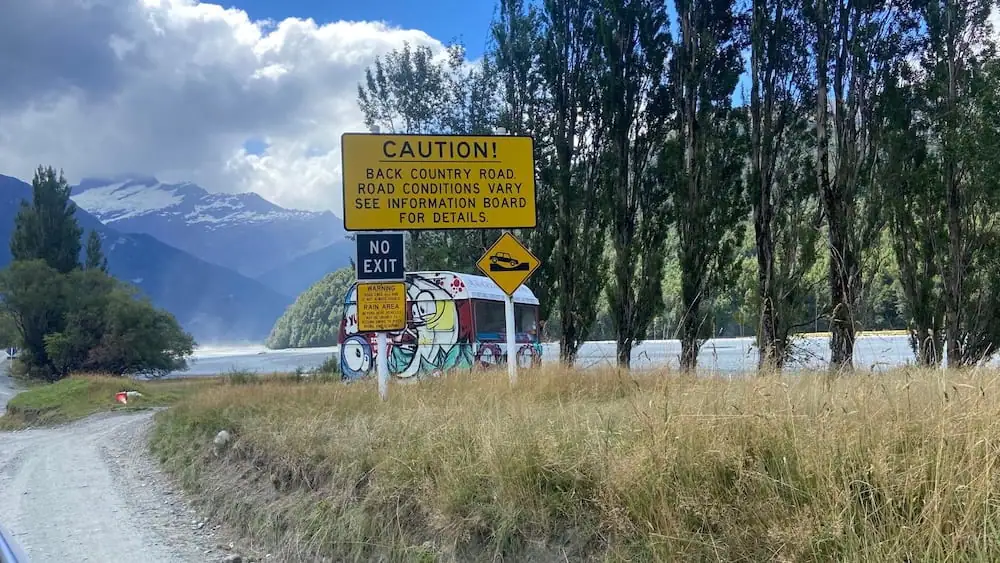
While I find that New Zealand has really good roads, there are still numerous tourist attractions that will require you to drive a little bit on gravel roads, known as unsealed roads here. Most of these roads aren't too bad, but they will require a bit more care when driving.
As you drive on gravel roads, especially if you're in a smaller vehicle with low clearance and two-wheel drive, you'll want to drive a bit more slowly. Keep an eye out for potholes and do your best to avoid them.
If a bigger four-wheel drive car comes up behind you, be sure to pull to the side whenever it's safe to do so and let them pass since they can likely navigate the road much more quickly.
There's also a chance you could encounter fords while driving on some of these gravel roads. These are (usually) small streams that cross over the road and must be driven through even more carefully.
I've driven on a number of gravel roads all over the South Island without a problem in my tiny little car:
- Stops along the east coast like to visit Nugget Point Lighthouse
- Cape Farewell on the northernmost point
- DOC campsites throughout the island
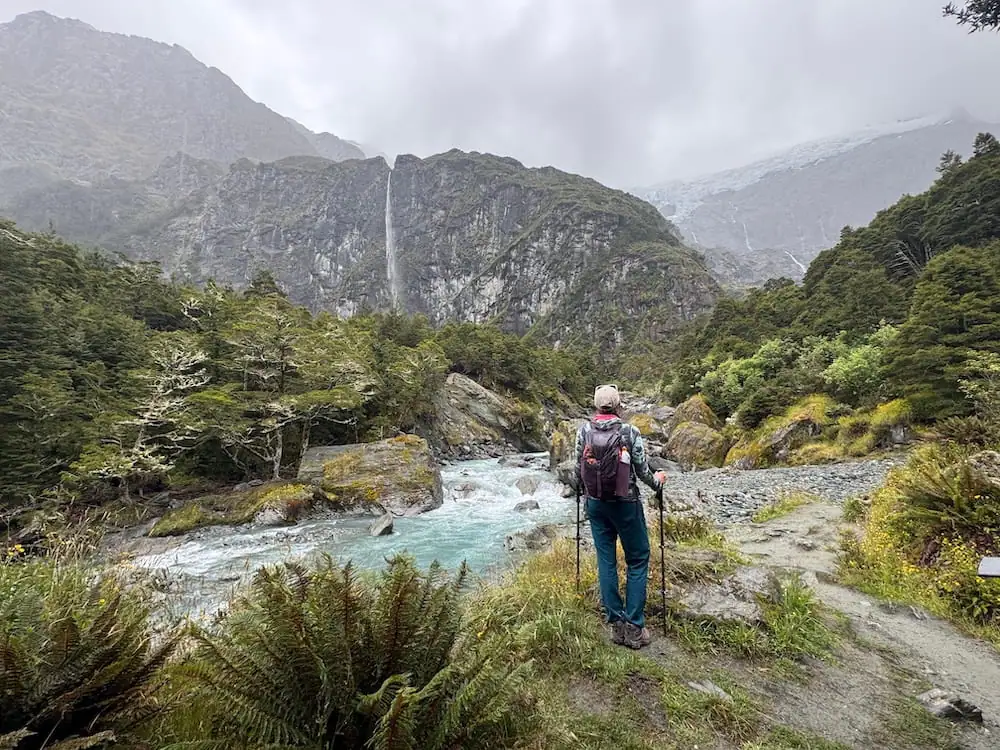
- Raspberry Creek Car Park for the Rob Roy Glacier hike
The Rob Roy Glacier Hike drive was definitely the hardest for me in my little car. It took SO much longer than I had anticipated because the road was so bumpy, especially the first time I drove it. I also had to be careful in choosing to drive it after days of no rain so the fords weren't too high.
15. Read the Fine Print of Your Rental Car Agreement
Before you leave with a rental car, make sure you read the fine print of your rental car agreement.
One area I see a lot of people get tripped up in is trying to get to the car park for the Rob Roy Glacier hike. Since that drive is along a bit more of an intense gravel road with ford crossings, many rental car companies won't allow you to take cars down that road.
So you'll want to see if there are any specific roads you're not allowed to drive on and if you're even allowed to drive on unsealed roads at all.
It's also a good idea to double check your rental car insurance coverage, whether you get that through your credit card or through the car rental company. With the roads here being a bit more rugged, I think it's all the more important to have it.
When I purchased car insurance for my vehicle here in New Zealand, I decided to pay a bit extra to get the most comprehensive policy I could, even including coverage for windshield (or windscreen as they say here) damage since I knew I'd be driving on gravel roads.
Need a Rental Car for New Zealand?
Here you can compare prices for your travel dates. I recommend booking early, especially if you plan to visit in peak season (December through February).
16. Get Roadside Assistance if Possible
A New Zealand road trip will likely take you through many remote areas where you may not see many other cars. That combined with the rugged terrain some of these roads pass through (hello West Coast!) means you might want to consider getting roadside assistance if possible.
Many rental car companies will offer this, and I think it's absolutely worth it for the extra peace of mind.
Personally, I purchased roadside assistance for myself for my year here. The last thing I want, especially as a woman traveling solo, is to find myself on the side of the road in the middle of nowhere without any help.

17. Research City Parking Before Your Visits
While New Zealand cities tend to be smaller than many cities around the world, parking can sometimes be difficult. Parking in places like Auckland, Christchurch, or Queenstown can be expensive and headache-inducing.
I haven't driven in Auckland myself yet and honestly am not sure if I ever would… Christchurch and Queenstown on the other hand feel a bit more manageable and do have some free parking areas. That said, you may have to park a bit far away from your destination and competition could be fierce.
So before you visit any larger city in New Zealand, I recommend doing some quick research first on parking. Your accommodation can probably help advise you on the best place to park.
18. Watch Your Position in the Lane
As you learn to drive on the left side of the road, I've found one of the hardest parts is positioning yourself well within the lane. It's common for first timers to go way too far over to the left.
With New Zealand's narrow and winding roads, it's all the more important to be careful with this.
This probably gave me the most anxiety when I first started driving here. I remember going around curves feeling like I was getting SO close to oncoming traffic and worrying so much if I was well positioned in the lane.
I've learned that using my side mirrors helps a lot. You can look in each of them and get a sense of how far or close you are to the line and adjust accordingly.

19. Don't Drink and Drive
Of course like anywhere, you want to be very careful with alcohol and driving. But know that New Zealand's laws on this may differ from your home country.
In New Zealand, the legal limit for drivers age 20 and older is 250 micrograms of alcohol per liter of breath, or more than 50 milligrams of alcohol per 100 milliliters of blood. That's 0.05% compared to the 0.08% limit in the U.S.
The police in New Zealand take drinking and driving very seriously and will set up checkpoints at times where they test all drivers passing through. I've been in the car with a friend before when he and all the other drivers passing through had to do a breath test.
If you're planning to drink heavily, walk, get a ride from a sober friend, or organize a taxi.
20. Keep Your Valuables Hidden
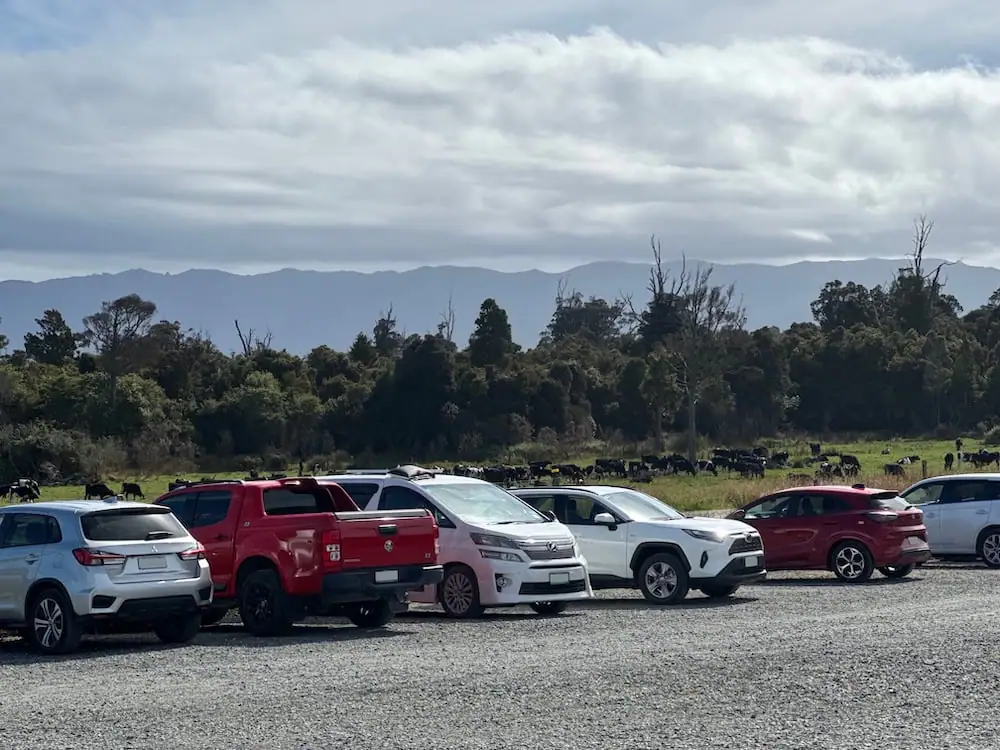
While New Zealand is considered one of the safest countries in the world, you still want to be smart with your belongings. Car break ins and theft do still happen here unfortunately.
If possible, keep all of your things in the trunk and hidden. If you can't keep everything in the trunk, then try and cover them up with a blanket or something in the body of the car. Or you can keep less valuable items in the body of the car.
There was a time when my tiny trunk was so full with my things that I had to keep some items in the body of my car. I mostly kept some shoes, bags of food, and a jacket or two out. I didn't love keeping them out and visible, but I figure none of those items would be tempting at least…
If you are going to leave your car parked for a few days while you're on a multi-day hike or something, you could also look into luggage storage. I did that a few times with my laptop in Te Anau when hiking some of the Great Walks.

21. When in Doubt, Don't Drive
If you're looking into a drive and it's feeling extra nerve wracking, know that you don't have to do it. Especially if it's for a top tourist attraction, you can likely find a shuttle to take you there instead.
I find that getting a shuttle can be even better than driving yourself at times anyways. Not only does it remove the stress and ensures a safer journey, but it helps you take in the scenery and get more information on the area as well.
Visiting Piopiotahi Milford Sound is a perfect example of this.
Milford Road is one of the busiest and most challenging roads to drive in New Zealand. It has sharp curves and very narrow sections–even one section that's only one lane for BOTH directions. There are one-lane bridges, a long tunnel, and often roadworks to contend with.
Plus with it being such a busy road, you'll often find some drivers who aren't driving very safely.
I've driven this road myself a few times. I feel comfortable enough doing it now after driving here for months, but when I first came to New Zealand I was SO glad to have someone else do the driving for me. I'll probably even book that same experience for whenever my mom visits because it makes it so much easier and more enjoyable.
If you're planning to visit Milford Sound, consider booking this small-group tour out of Queenstown with a drive there and flight back. I did it myself and it's the absolute BEST way to see Milford Sound in my opinion!
➡️ Book Your Milford Sound Tour Here
22. Know That You Probably Don't Need a 4WD
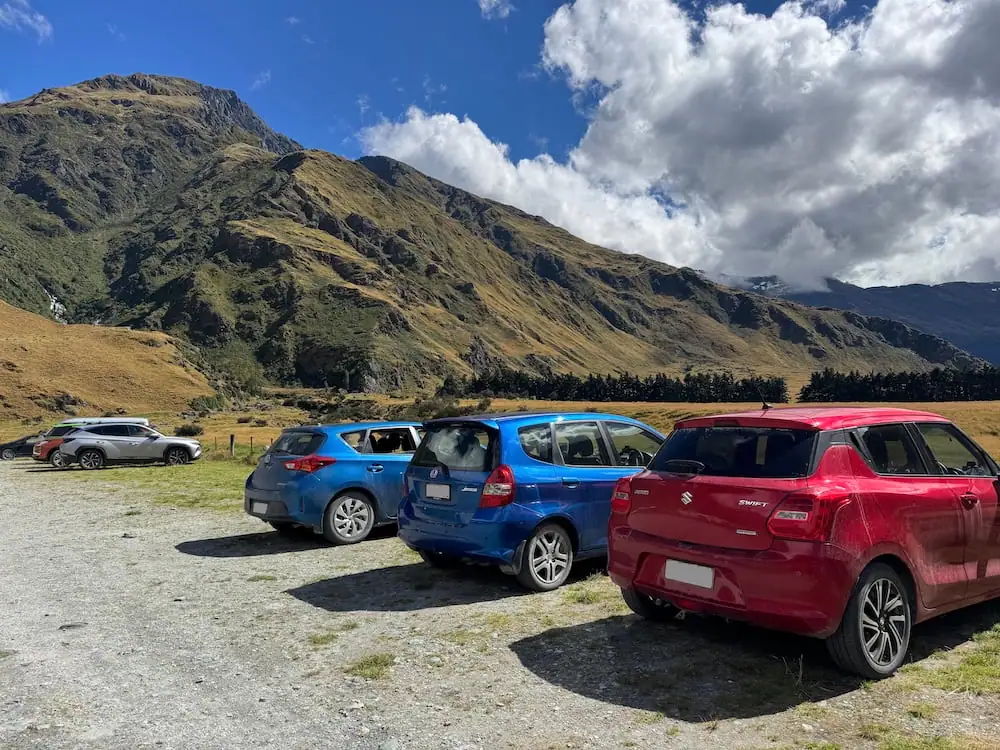
When I first got to New Zealand, I felt SO stressed trying to figure out how to buy a car. I felt especially torn trying to decide whether I needed four-wheel or all-wheel drive or if a two-wheel drive car would be sufficient.
I ultimately decided on my tiny little two-wheel drive Honda Jazz, and after spending almost half a year driving all over the South Island, she hasn't let me down yet.
A compact car like this is can be great because it's more fuel efficient (all the more important these days), easier to park in packed trailhead parking lots, and can still get to most places.
I've really only felt held back by my car when it comes to the Rob Roy Glacier parking lot, but even then, I've been able to make the drive no problem when there's been a good weather window.
New Zealand roads are generally well-maintained, better than where I'm from in the U.S. You can absolutely get to most places you need to go with just two-wheel drive.
If you are planning to do any off-roading or driving in winter, it could be a good idea to consider four-wheel drive but know that it's absolutely not necessary for your typical trip to New Zealand.
Book Your New Zealand Rental Car
Book your rental car sooner rather than later for the best deal!
➡️ Compare Rental Car Deals Here

23. Don't Assume There Will be Another Gas Station Soon
Like I said, a lot of New Zealand driving is pretty remote. And you might find yourself driving for an hour or longer without any sign of civilization.
That means you'll want to be even more mindful of your gas levels. If your gas is running even remotely low, it's a good idea to top it off just to be safe.
I made this mistake myself recently… I thought to myself, Eh I can go another hour no problem and then I'll stop for gas.
As that lever on my gas meter slowly dropped, getting closer and closer to the E, I started panicking just a little bit… Thankfully I did make it to the gas station just in time, but I really shouldn't have pushed it like that.
24. Know That You May Need Snow Chains in Some Areas During Winter
Roads on mountain passes can get icy and snowy in winter. There's a chance you might need snow chains depending on those road conditions.
For instance, they say that folks who regularly travel the Crown Range Road linking Wānaka and Queenstown in winter should carry snow chains with them as they'll inevitably need them at some point.
I have not yet driven in winter here but imagine I may need to get some chains myself. Or I'll just avoid driving a bit more and stick to longer but lower routes that avoid those mountain passes.
25. Enjoy the Journey
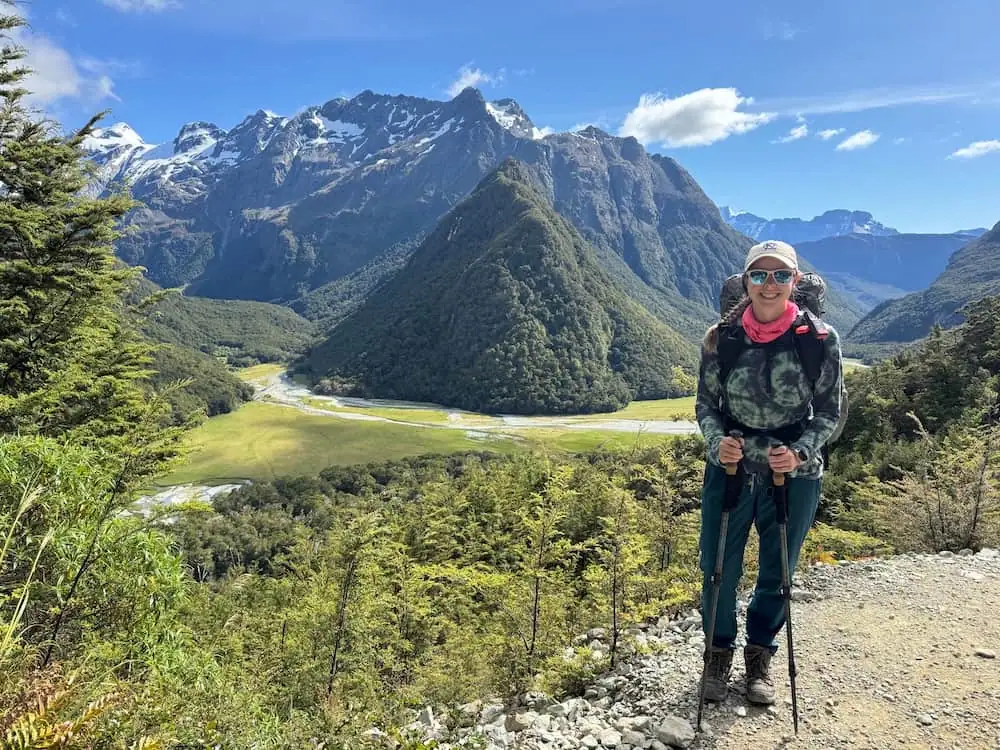
Take a deep breath. You got this. Driving in New Zealand is one of those things that feels scarier until you actually get behind the wheel and do it.
And while I know you might be feeling rushed to get the scary driving over with and get to your journey, try your best to really live in the moment and take in the beautiful scenery around you on your drives.
You'll be driving in one of the most beautiful countries in the world with mountains, vibrant blue waters, and heeeeaps of sheep.
I know I'll for sure never forget some of my favorite drives here: along Lake Wakatipu outside of Queenstown while jamming out to ABBA, up the rugged West Coast with glaciers and palm trees, and alongside the mountains and lakes near Wānaka.
Some of the Most Challenging Drives in New Zealand
As you think about your driving plans, I figured you might want a quick guide to some of the more challenging drives in New Zealand. Here's a list based on drives I've done plus some I've heard others say are more difficult.
These are drives that are particularly winding, narrow, and with lower visibility at times. Some of them also have higher risks of weather-related hazards like snow/ice, landslides, etc.
Unless otherwise noted, these are all doable drives if you take extra care as you navigate them. You should just try to avoid them until you're more used to driving in New Zealand if possible. And if you do plan to drive them, just take more care to study the routes beforehand and implement the tips I listed out above.
Difficult Drives on the North Island
- Around the Coromandel Peninsula
- Between Napier and Taupō
- Rimutaka Hill outside of Wellington
- Between Katikati and Tauranga
Difficult Drives on the South Island
- Milford Road from Te Anau to Milford Sound
- Crown Range Road connecting Queenstown and Wānaka
- Alongside Lake Wakatipu between Kingston and Queenstown
- Haast Pass between Wānaka and the West Coast
- Skippers Canyon Road in Queenstown–this is one of the most dangerous roads in New Zealand and you have no business driving on it.
- Arthur's Pass between Christchurch and the West Coast
- West Coast
- Tākaka Hill in the Golden Bay area
- Between Motueka and Marahau to get to Abel Tasman National Park
- Port Hills area outside of Christchurch
- Otago Peninsula outside of Dunedin
Common Mistakes Tourists Make Driving in New Zealand
When you drive in New Zealand (because yes, you will! you got this!!), make sure to avoid this common mistakes:
❌ Driving too far in one day
❌ Driving immediately after landing
❌ Going too fast (the speed limit is a real limit here!)
❌ Not pulling over to let traffic behind pass
❌ Trusting Google Maps timing estimates
❌ Underestimating the challenging mountain roads
❌ Renting a giant campervan immediately

Frequently Asked Questions on New Zealand Driving
Here are some answers to common questions when it comes to driving in Aotearoa.
Is it difficult for Americans to drive in New Zealand?
Driving in New Zealand for the first time as an American can take some getting used to, but many people find it easier than they originally thought. Adjusting to the other side of the road isn't too difficult, but it's more so the narrow and winding roads that Americans tend to find more challenging as they adjust to driving in New Zealand.
Do you need 4WD in New Zealand?
Most visitors to New Zealand do not need four-wheel drive as most of the top things to do in the country are accessible without it. If you are planning to do some more remote adventures or are planning a visit in the winter, it could be worth considering though for some extra peace of mind.
Is tailgating illegal in NZ?
ChooYes, tailgating is illegal in New Zealand and doing it can lead to fines. NZTA encourages following the 2-second rule in normal conditions and 4-second rule in adverse weather conditions.
Is driving in New Zealand safe?
Driving in New Zealand is generally safe, but like driving anywhere, it's never completely safe. There is often less traffic than in many other countries, but the winding roads are more challenging to drive.
Should I rent a campervan or a car in New Zealand?
If you've never driven in New Zealand before, I recommend renting a car to start so you can get used to the roads. You could rent a campervan later if you're looking for more freedom and flexibility, but know that it might be more expensive than renting a car and staying in hostels or hotels.

Book Your Rental Car in New Zealand
You've probably been driving for years. You can absolutely drive in New Zealand, even if it feels a little intimidating at first.
Take it slow, give yourself time to adjust, and don't start zooming down the most challenging roads on day one. Soon enough, driving on the left will feel shockingly normal.
Now that you're all set to start driving in New Zealand, I recommend booking your rental car early, especially during summer. Prices can jump quickly and automatic vehicles typically sell out first.
Read More About New Zealand Travel Essentials
- 40 Must-Know New Zealand Travel Tips for a Smooth Trip
- Driving in New Zealand: Tips from a Once-Nervous American
Read More About the Great Walks
- NZ Great Walks Packing List for Women (What I Pack)
- Routeburn Track in 2 Days From Te Anau: My Solo Hiking Guide
- Kepler Track in 3 Days: My Solo Great Walk Itinerary
- Te Anau Accommodation: Hotels, Hostels & Camping
- Rakiura Track Guide: 3 Days Camping on Stewart Island Solo
- Stewart Island Accommodation: Where to Stay for Every Budget
- 8 Best Things to Do on Stewart Island I Actually Loved
Read More About South Island Travel
- 11 Things to Do in Te Anau: More Than Just a Milford Gateway
- Doubtful Sound Overnight Cruise Review
- Te Anau Accommodation: Hotels, Hostels & Camping
- Fox Glacier Heli Hike Review: Is it Worth It in 2026?
- Roy’s Peak Sunrise: A Bucket List Hike Worth Waking Up For
- 8 Best Things to Do on Stewart Island I Actually Loved
- Stewart Island Kiwi Tour Review: Is it Worth it?
- How to Get to Stewart Island: I Tried the Flight & Ferry
- Stewart Island Accommodation: Where to Stay for Every Budget
